What is Trinity Road LLC Charge on Credit Card?

A Trinity Road LLC charge on your credit card may come from The Catholic Company or another brand in its retail and online-content group. The parent business name can be unfamiliar even when you remember buying a religious gift, book, or coffee.
The Catholic Company’s official terms name Trinity Road, LLC as the seller. This guide shows how to connect the payment to an order or membership, request a correction, and report a debit nobody authorized.
What Is Trinity Road LLC Charge on Credit Card?
Trinity Road, LLC is the legal business named in the terms for The Catholic Company, an online retailer of religious gifts, devotional products, books, and other merchandise.
The company has also identified Good Catholic and Catholic Coffee as related brands in public customer support responses. A payment can therefore show the parent company name instead of the storefront or subscription a shopper remembers.
Some purchases involve physical goods, while other related services may include online programs or recurring products. The descriptor alone does not prove which item or membership was purchased.
A valid order should match an invoice, email receipt, shipping record, or subscription account. Do not assume that every debit carrying a familiar parent company name was approved by an authorized card user.
Which Trinity Road Brand Charged You?
The Catholic Company sells Catholic gifts, books, jewelry, home items, and devotional supplies. A household may have ordered a gift without recognizing the parent company’s name on a credit card statement.
Good Catholic has offered faith-related programs and other online content. A course or membership payment may have different billing terms than a one-time book purchase.
Catholic Coffee and other associated retail names may also be relevant to a customer’s order history. Search the actual storefronts you used instead of guessing the source from the words Trinity Road.
The company has explained publicly that shoppers sometimes recognize one of its brands but not its corporate payment descriptor. That makes the original receipt especially useful.
If you did not buy anything from these businesses, do not assume that the religious-goods category explains your payment. Request expanded merchant details from the issuer.
Locate Your Order or Membership Confirmation
Search your email for Trinity Road, The Catholic Company, Good Catholic, Catholic Coffee, order confirmation, renewal, and the charge amount.
Check any retail account under the email address used for the purchase. Compare the item total, tax, shipping, and fulfillment date with the card debit.
The Catholic Company’s terms explain that it may charge the payment card after an order has entered the shipping process. A debit could therefore post after the day you checked out.
If the charge was for an online service, look for the plan agreement, access period, and any renewal setting. Different related brands may use separate account-management systems.
If neither a store order nor a subscription matches, ask verified support for a transaction lookup using limited payment information. The card issuer can help confirm the legal merchant.
Recurring Charges and Cancellation
Do not automatically describe Trinity Road as a monthly subscription service. Many transactions are ordinary merchandise orders, and the actual product determines whether future billing can occur.
If you enrolled in a recurring program, coffee delivery, or membership, locate its original terms and the platform that manages renewal. Check whether any future payment is scheduled.
Cancel through the corresponding storefront or service provider, not a generic contact page that cannot access the account. Save the cancellation effective date in writing.
Uninstalling an app, deleting promotional email, or returning merchandise does not necessarily cancel a separate subscription. Review each arrangement independently.
If the provider bills again after confirmed cancellation, show the agreement and cancellation record to its verified support team and ask for a review.
Returns, Refunds, and Unauthorized Orders
If you received an incorrect or damaged product, check the actual store’s return policy and ask for the order-specific return instructions. The policy for physical goods can differ from digital content.
An order may ship in multiple packages or include a shipping charge. Compare the final invoice before claiming a duplicate payment.
A posted refund may appear as a separate statement credit. Keep return tracking and any refund confirmation until the amount is visible in the card account.
If the merchant says it cannot locate a legitimate purchase, document its response and request the bank’s full transaction record. A real retailer can still receive an order made with compromised card details.
If nobody approved the debit, contact the issuer promptly about fraud and security options instead of relying only on a routine merchandise refund request.
Check the Full Card Statement Before Assuming Fraud
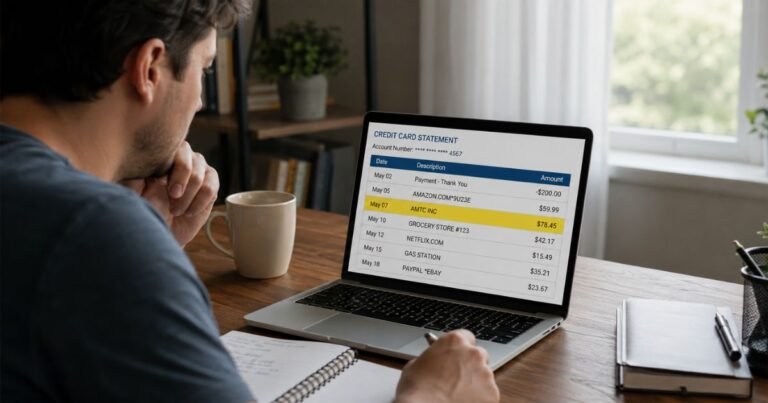
Open the payment inside the verified app or website of your card issuer. Record the full descriptor, posting date, amount, and any merchant city, website, or transaction category. A shortened business name can differ from the brand printed on a receipt.
Review the transaction status before deciding that you were charged twice. A pending authorization can disappear or settle as a completed payment. A final posted debit and its earlier authorization should not automatically be counted as two purchases.
Search your email and order accounts for the amount and date. Check payment wallets and ask other authorized card users whether they recognize the purchase. A cardholder can approve an order without remembering the parent company that handled billing.
If no matching receipt appears, ask the issuer for the complete merchant of record and any available transaction reference. Its payment network data can provide more reliable information than an unsupported online merchant-lookup guess.
Contact a verified merchant only after you have enough evidence to identify the business. Keep the amount, date, order reference, and support response together in case the charge needs further review.
What to Do If the Amount Is Wrong or Unauthorized
When you recognize the business but believe it collected an incorrect total, request an itemized invoice and compare it with your checkout terms. Keep any cancellation confirmation, refund promise, and later statement credit.
If no authorized card user recognizes the posted payment, contact the issuer promptly through the number on your card or its secure app. Ask whether to lock the card, replace it, or change account credentials while the bank investigates.
The Consumer Financial Protection Bureau explains that many credit-card billing errors require a written notice within 60 calendar days after the first statement containing the error was sent. Use the billing-error address your issuer specifies, not simply its regular payment address.
A chargeback or issuer dispute is a review rather than a guaranteed refund. Keep your case number and supporting documents, and ask the issuer how to pay the undisputed portion of your balance while the issue is open.
Do not share complete payment card numbers, security codes, or one-time banking passwords with an unfamiliar charge lookup website or caller. Verified account channels are the safer place to discuss card activity.
Avoid Another Unfamiliar Charge
Turn on transaction alerts when your card issuer offers them. The notification may help connect a legal company name with something you purchased moments earlier.
Store purchase receipts, renewal notices, and cancellation confirmations in a searchable email folder. Note any payment processor name mentioned at checkout, especially when it differs from the store or service you used.
If you confirm a recurring agreement you no longer need, cancel through the provider or app store that actually collects the payment. Uninstalling an app or replacing a card does not necessarily terminate a valid subscription.
Review posted transactions every month even when you use automatic bill payment. Small unknown entries can be genuine low-cost purchases, mistaken renewals, or unauthorized attempts, and the amount alone does not establish which.
If a merchant issues a refund, check for the final posted credit. Refunds often appear as separate transactions, while pending holds may simply be released without any explicit credit line.
Official Sources and What They Confirm
The Catholic Company’s published terms identify Trinity Road, LLC as its legal seller. In a documented public business response, the company explains that it operates brands including The Catholic Company, Good Catholic, and Catholic Coffee and that cardholders may recognize the storefront but not the parent’s billing name.
Read The Catholic Company’s official terms naming Trinity Road, LLC for the cited company information. Our guide to identifying unfamiliar credit card charges offers additional checks, and the CFPB’s official billing-error guidance explains dispute steps.
FAQs About Trinity Road LLC
Q: Is Trinity Road LLC connected to The Catholic Company?
A: Yes. The store’s published terms expressly identify Trinity Road, LLC as its legal business.
Q: What other brands might explain the charge?
A: The company has identified Good Catholic and Catholic Coffee among its related brands. Match the exact amount to the receipt.
Q: Does Trinity Road automatically mean a subscription?
A: No. The payment may be a one-time store purchase. A recurring arrangement requires its own billing agreement.
Q: How can I dispute an unknown Trinity Road payment?
A: Check purchases and authorized users, then ask the card issuer to investigate a posted payment nobody approved.
Conclusion
Trinity Road LLC charge on credit card statements should be explained by the business’s actual invoice and your card issuer’s merchant record. A receipt from the actual Trinity Road storefront or service is the best way to identify what was purchased and whether renewal applies.
Start with the merchant’s verified account tools and original receipt. If the posted debit remains unexplained or unauthorized, ask the issuer to investigate promptly.
Disclaimer: This article provides general consumer information, not financial or legal advice. Merchant terms, refunds, and card issuer procedures vary, so verify account-specific facts with the provider and your bank.