What is Purchase Interest Charge on Credit Card?

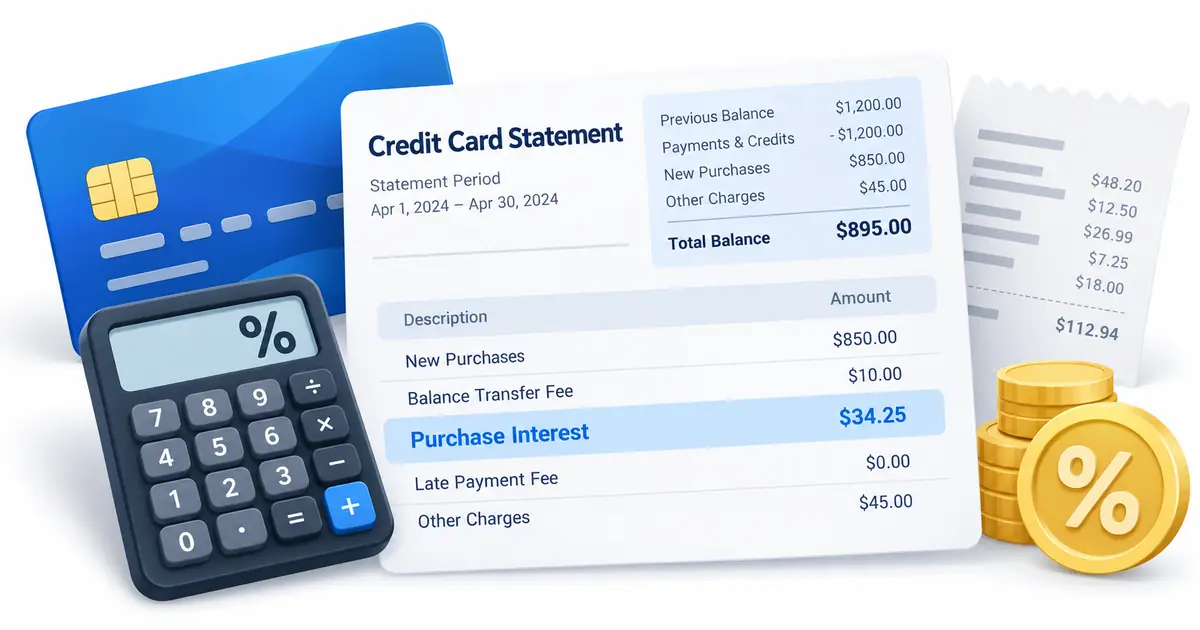
A purchase interest charge on credit card statements may be surprising, especially when you made a payment recently. It is generally an interest amount added by your card issuer, not a new purchase from a store.
This guide explains what causes it, how issuers may calculate it, which statement fields to review, and what you can do to limit additional interest.
What Is a Purchase Interest Charge on Credit Card?
Purchase interest is the finance charge your card issuer adds when purchases accrue interest. It is not a new store purchase or a separate merchant subscription.
Credit-card interest is the price of borrowing on a balance that is subject to an APR, or annual percentage rate. Your statement should distinguish major balance categories and show the rates being used. Those categories can accrue interest differently.
Why Purchase Interest Appeared This Month
You carried part of a purchase balance past the due date. The billing cycle and the transaction date both matter when interest is calculated.
You lost the grace period because a prior statement was not paid in full. A payment that seems early may still leave an eligible balance on some days.
Your promotional purchase APR ended or an introductory rate changed. Review any promotional notices and the dates of changes to your APR.
Your payment posted later than expected, or you paid less than the full statement balance. Your statement is the starting point for checking the issuer’s calculation.
How Card Issuers Calculate the Interest
Issuers often use a daily periodic rate based on the annual percentage rate divided by 365, although methods and leap-year conventions may vary. The rate is applied to an eligible daily balance, so the exact amount depends on balances and dates.
Many issuers calculate a daily periodic rate from the APR and apply it to balances under the card agreement. Some use an average daily balance approach. A mid-cycle purchase, cash advance, payment, or rate change may alter the outcome.
For a simple illustration, a balance of $1,000 at 24% APR has a rough daily interest cost of $0.66 using a 365-day divisor. That is only a teaching example, not a prediction of your actual statement. Real balances and compounding methods vary.
Your card may have separate APRs for purchases, balance transfers, cash advances, and promotional balances. Do not use the purchase APR to estimate cash-advance interest unless the agreement says the rates match.
How to Check Whether the Charge Is Correct
Start with the full statement entry, not just the words Purchase Interest. Copy the amount, currency, date, and whether the entry is pending or completed. Keep your last four card digits for your own records.
For more on the difference between rates, compare our guides to cash interest and finance charges. You can also see how finance charges are calculated before asking your issuer to check a balance.
Compare the transaction with receipts and online account histories for several days around the posting date. A business may charge after the purchase date, and your bank may show a different date from the seller.
Use the checks that matter for this label: Read the interest charge calculation section on your statement. Compare your purchase APR with the rate in the card agreement.
If you are still unsure, continue with these checks: Review the previous two statement balances and payment dates. Ask the issuer when your grace period applies again. Ask the issuer for more merchant information rather than relying on a search-result guess.
If a household member or employee is allowed to use the card, ask whether they recognize the transaction. Do this privately and without sharing your account number or login credentials.
What Your Grace Period Means
A grace period is the window when eligible purchases may avoid interest if you meet the issuer’s payment conditions. It does not necessarily apply to cash advances. Some purchases may also lose the grace period when a previous balance was carried.
A minimum payment usually keeps the account current but does not prevent purchase interest. Paying the statement balance in full by the due date generally avoids interest only when the grace period applies.
If your statement balance was paid but interest still appeared, ask the issuer whether you owed residual or trailing interest from earlier days. Interest can accrue between statement dates and the day a payment is credited. A later bill may reflect that time.
Ways to Reduce Future Interest
Pay as much of the balance as you can, as early as practical. Since many cards accrue interest daily, reducing the balance sooner may lower the amount charged. Avoid assuming that waiting for the due date has no cost.
If possible, pay the full statement balance by the due date once the grace period is available. Check your agreement to learn how the issuer restores the grace period. Making only the minimum payment generally will not accomplish that.
Review promotional APR expiration dates and set payment reminders. If your card has several balances, ask how payments above the minimum are applied. U.S. payment-allocation rules generally direct amounts above the minimum toward higher-rate balances first.
Can You Ask the Issuer to Reverse Interest?
You can request a review when a payment was misapplied, an APR seems incorrect, or the charge does not match the agreement. Some issuers may consider a goodwill adjustment, but no waiver is guaranteed. Explain the specific reason and provide dates.
If the interest results from a real unpaid balance, merely canceling the card will not erase what you owe. A card closure can leave an outstanding balance accruing interest. Confirm the payoff amount with the issuer.
Keep the statement page that shows the rate and balance category. If the bank corrects an error, request written confirmation and look for the credit on a later statement.
When to Dispute an Interest Calculation
Ask for a breakdown of the balance, APR, dates, and payment credits used to determine the charge. Compare the explanation with your account agreement. If the figures conflict, describe the problem in a formal billing-error notice.
For many U.S. credit-card billing errors, you generally must send a written notice within 60 days after the first statement with the mistake was sent. Follow the dispute address shown on your statement. Continue paying undisputed balances during the investigation.
An interest dispute is different from reporting identity theft. Contact the issuer promptly if an unauthorized purchase or cash advance caused the balance. That underlying transaction may need its own investigation.
FAQs On Purchase Interest Charge on Credit Card
Q: Is purchase interest a merchant purchase?
A: No. It is generally an interest entry from your card issuer. You can confirm the rate and applicable balance in the statement’s interest section.
Q: Can I avoid purchase interest in the future?
A: Possibly. Pay the relevant balance promptly and review whether a grace period applies. Cash advances usually do not receive the same grace period as purchases.
Q: Why did I get interest after making a payment?
A: You may have paid less than the full eligible balance, lost a grace period, or incurred trailing interest. Ask the bank to show its calculation and payment dates.
Q: Can I dispute an incorrect interest amount?
A: Yes, you can ask the issuer to investigate a possible calculation or payment-credit error. Follow the written dispute directions and applicable deadline on your statement.
For retail financing terms, read merchandise finance charges. A store-card purchase can involve different promotional and interest rules.
Conclusion
A purchase interest charge on credit card records should be judged by its details, not by its name alone. Check the statement, your receipts, and the related account before taking action.
If the entry is wrong or unauthorized, contact the relevant company or card issuer promptly. Keep proof of your questions and any correction or cancellation.
Disclaimer: This article is for general information only, not financial or legal advice. Policies and rights may vary by card issuer and location. Confirm account-specific questions with the company or your bank.