Understanding Credit Card Charges

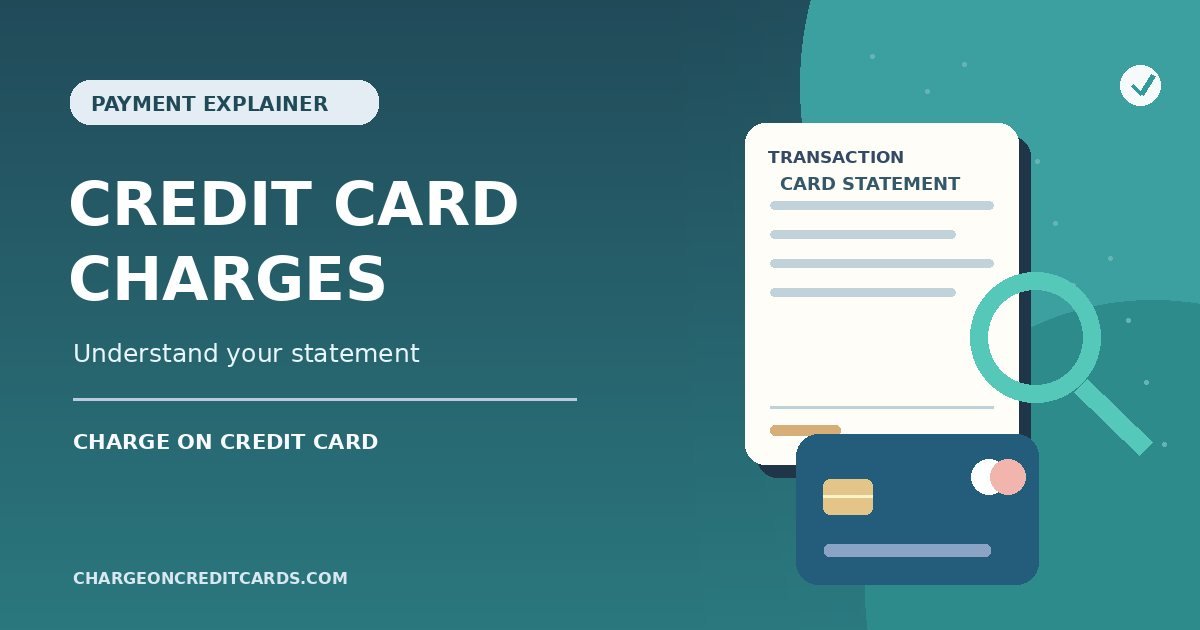
A credit card charge may be a purchase you authorized, a fee your card issuer added, or a payment you cannot explain. Knowing which type you are seeing makes it easier to decide what to do.
Some charges are routine and others deserve quick attention. This guide explains the main categories, how they appear on your statement, and when to contact the merchant or your bank.
What Are Credit Card Charges?
A credit card charge is an amount added to your credit card account. It may come from a merchant purchase, a service subscription, interest, a card fee, or another transaction covered by your account agreement.
Not every charge goes to the credit card issuer. A purchase pays a merchant, while interest and many card fees generally go to the issuer under your agreement.
Your statement should help you distinguish transactions, payments, credits, and fees. A payment reduces what you owe, while a posted purchase or fee usually increases the balance.
The key questions are who charged you, why the amount applies, and whether you authorized it. A short or unfamiliar description does not by itself mean the payment is fraudulent.
Common Types of Credit Card Charges
Purchase charges include shopping, travel, bills, subscriptions, and other merchant transactions. A merchant may use a legal business name or payment processor that differs from the shop name you remember.
Interest is commonly charged when a balance is carried and the grace-period rules no longer protect the purchase balance. Your APR, daily balances, and card agreement determine the calculation.
An annual fee is the card issuer’s charge for maintaining a card that has one. Other account fees may include certain balance transfer, cash advance, late payment, or foreign transaction fees where permitted and applicable.
A cash advance can have different fees and interest rules from a normal purchase. Interest may start sooner than expected, so check your card agreement before using this feature.
Pending authorizations are not always completed charges. Hotels, gas pumps, and some online orders may use temporary holds before the final amount posts.
How to Read a Statement Line Correctly
Start with the transaction section and find the date, amount, and description. Compare the purchase date with the posting date, because they may differ.
If the line has a merchant name, check receipts, order histories, subscriptions, and authorized-user purchases. The merchant descriptor may be abbreviated or name a payment processor.
If the line is interest or a bank fee, review the rates and fee disclosures in your statement or cardholder agreement. Ask the issuer for the calculation if you cannot reconcile the figure.
Check whether a displayed amount is still pending. Do not assume a pending authorization and a later posted item are two completed payments.
Identify any credits separately, including refunds or rewards adjustments. A refund usually appears as its own entry instead of erasing the original charge.
Can You Avoid or Stop Some Card Charges?
You can generally avoid purchase interest on eligible new purchases by meeting the card’s grace-period requirements, which often include paying the statement balance in full by the due date. The exact terms are in your card agreement.
You can avoid some optional charges by choosing how you use the card. For example, a card without an annual fee may suit you better if you do not use a premium card’s benefits.
Cancel subscriptions through the merchant or payment platform that bills them. Removing an app, hiding a transaction, or replacing a card is not a reliable substitute for canceling a legitimate recurring agreement.
Set payment reminders or automatic payments if that fits your finances, but verify the scheduled payment amount. A minimum payment generally does not eliminate purchase interest on a carried balance.
If a fee seems incorrect, ask the issuer to explain it or whether a waiver is possible. Do not assume every fee will be reversed.
Purchases, Interest, Fees, and Fraud Compared
A retail purchase can be checked using an itemized receipt. Interest requires reviewing balances and APR terms, while a card fee requires the account disclosures.
Unauthorized card use requires a security and dispute response. The first step is reporting it to your issuer rather than only asking the named merchant to cancel something.
A merchant’s refusal to refund a legitimate sale is different from a stolen-card transaction. Give your issuer accurate details about what happened so it can apply the right process.
If you are comparing card offers, look beyond a single annual fee. Consider expected interest, foreign fees, cash-advance terms, and how you actually use the card.
If You Cannot Recognize the Transaction
Start by opening the transaction details in your credit card’s secure app. Note the full descriptor, exact amount, transaction date, and whether it is pending or posted.
Compare the payment with your email receipts, purchase history, calendar entries, and any shared-card purchases. You may recognize the amount even when the merchant’s legal name looks unfamiliar.
Ask a spouse or another authorized user whether they recognize the transaction, without making assumptions. A family purchase can be legitimate even if you were not present.
If no one recognizes the payment, contact your card issuer using the number printed on the card. Ask for the complete merchant record and how to report a potentially unauthorized payment.
The issuer may recommend a dispute, a temporary card lock, or replacement if card information was compromised. Whether those steps are needed depends on what the bank finds.
Do not share your full card number, verification codes, or banking password with a caller who offers to remove a charge. You should contact your bank through a verified channel.
Pending, Posted, and Reversed Charges
A pending charge is often an authorization rather than the final completed payment. The amount or label may change when the merchant submits the transaction for settlement.
A pending entry and the later posted entry can briefly appear together. Before treating them as a duplicate, check whether both actually posted.
Two different posted entries may represent separate items, additional services, an installment, or a genuine billing error. Compare each line with individual receipts or statements.
If a refund is issued, it may appear as a separate credit. You should not assume the original charge will simply disappear from your history.
Refund and reversal timing varies by merchant, payment network, and bank. Keep the confirmation and check the posted account activity rather than relying only on a verbal promise.
How to Request a Billing Correction
If you recognize the merchant but disagree with the amount, contact the business through its official billing or customer-service channel. Explain which service, item, or fee appears incorrect.
Ask for the itemized receipt and the terms that applied when you paid. Save the response, especially if the merchant agrees to a partial or full credit.
If the company cannot resolve a billing error, ask the issuer about its dispute process. A chargeback is an investigation, not an automatic refund or a substitute for canceling future services.
For many credit card billing errors, the Consumer Financial Protection Bureau says you must mail or otherwise send qualifying written notice within 60 calendar days after the first statement that shows the error. Follow the billing-error address and instructions supplied by your card issuer.
Keep copies of your written notice, statement, emails, and case reference number. Do not withhold unrelated payments on your card based solely on an unverified charge.
Report a truly unauthorized payment promptly rather than waiting for more charges. Your issuer can tell you which fraud protections and account changes apply to the situation.
Preventing Surprises on Future Statements
Enable transaction notifications if your bank supports them. Checking a payment soon after it happens makes it easier to remember where you used the card.
Keep searchable receipts and confirmation emails for purchases, memberships, and renewals. Include the date, amount, and the seller’s displayed billing name when possible.
Review the saved payment methods in your online accounts and shopping apps. If you decide to cancel a subscription, use the actual subscription-management setting rather than merely removing an app.
Check your monthly card statement for extra payments and unfamiliar merchant spellings. If you cannot explain a line after reasonable checks, follow up with the issuer.
FAQs On Credit Card Charges
Q: Is a pending charge money I already owe?
A: A pending authorization has not necessarily posted as a final charge. Check whether it settles, changes, or disappears.
Q: Why am I charged interest after making a payment?
A: Your payment may not have covered the full statement balance or restored the grace period. Review the card’s terms and daily-balance calculation.
Q: Can my issuer remove a late fee?
A: You can ask for an explanation or a courtesy waiver. Whether a fee can be waived depends on the issuer and circumstances.
Q: What should I do about an unknown purchase?
A: Check your receipts and authorized users, then contact your issuer promptly if the transaction is not yours.
Official references: CFPB credit-card basics; CFPB billing error steps.
For real examples of shortened business names, see our guides to VIOC, ActiveWorks, and WM Supercenter charges.
Conclusion
A credit card charge is best understood by matching a real transaction to a receipt and merchant record. Distinguish merchant purchases from issuer fees before trying to cancel or dispute anything.
Review your account history and ask the merchant for documentation if appropriate. Contact your bank promptly when a charge remains unexplained or appears unauthorized.
Disclaimer: This article provides general information, not financial or legal advice. Billing policies and card issuer procedures vary, so verify questions about your specific account with the company or your bank.