TST Charge on Credit Card: Restaurant Payment?

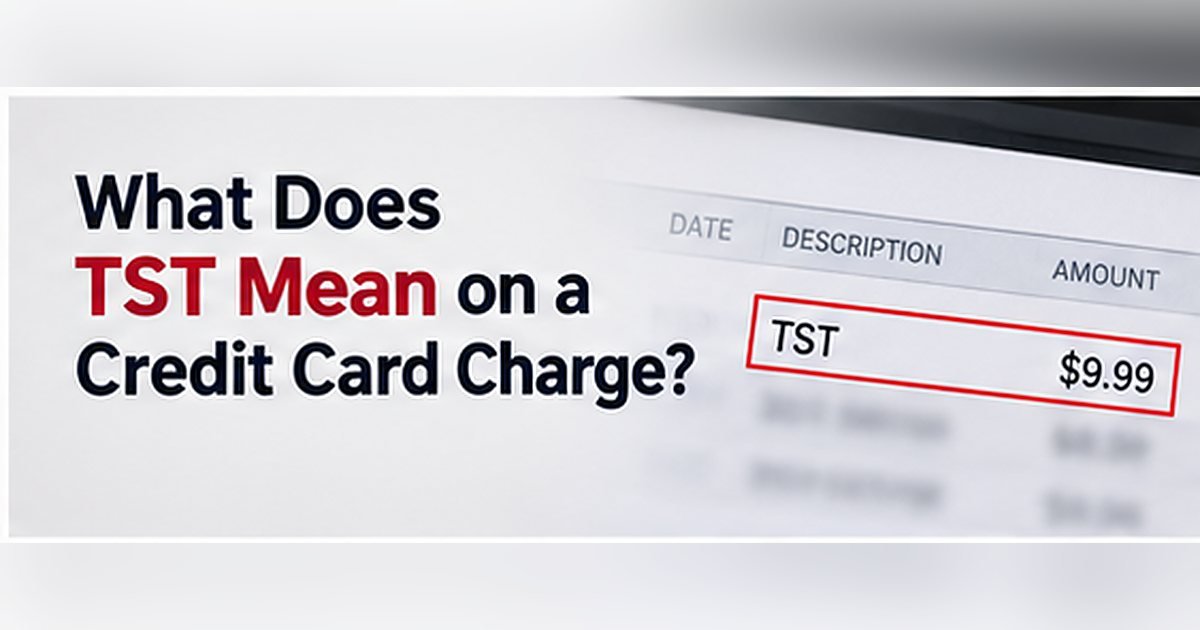
A TST charge on credit card statements often points to a restaurant that uses Toast payment processing. The letters can look unfamiliar when the restaurant’s name follows an abbreviated prefix, but a matching receipt can usually explain a legitimate meal.
A name on a statement is only the starting point. This guide explains the likely billing reason, how to check it, and what to do if the purchase is wrong.
What Is TST Charge on Credit Card?
Toast, a restaurant technology and payment platform, documents statement entries in the form TST*Restaurant Name as purchases from a restaurant using Toast. This is verified guidance from the payment processor, not a promise that every transaction beginning with TST came from the same business.
The restaurant name, amount, tip, and date should match a purchase you or another authorized cardholder made. If the details do not fit, use the issuer’s merchant information rather than guessing from the three letters.
What does TST*Restaurant Name mean?
In the Toast statement format, TST is associated with a restaurant payment and the text after the asterisk identifies the restaurant. You may see a shortened business name if the full description does not fit the issuer’s display. The statement can therefore look different from the sign outside the restaurant.
A restaurant using Toast is still the seller of your meal. Toast processing does not itself prove the amount is correct or authorized. Compare the restaurant, dining date, and total before deciding what to do.
Check dining, takeout, and delivery receipts
Look through text confirmations, email receipts, printed receipts, and restaurant loyalty accounts. A takeout or online order may post under the restaurant’s processing name rather than the delivery service you expected. Ask authorized family card users about restaurant visits around the posting date.
Use the final charged amount rather than only the menu subtotal. Taxes, an agreed tip, and other disclosed charges may explain why the amount differs from your initial estimate. If you have a dispute about the tip, keep both the original receipt and final transaction entry.
Why the restaurant name might be abbreviated
Card networks and issuers limit how much merchant-description text they display. Payment processors may also use standardized prefixes to identify processed transactions. Toast’s official support materials confirm that the TST*Restaurant Name format can appear on customer statements.
A short descriptor may hide a location suffix or part of a business name. Tap the entry to view fuller details, and compare the issuer-provided merchant location with places you visited. Do not conclude that the entry is fraudulent just because it omits the word restaurant.
Could the amount include a tip?
A card authorization made when you first pay at a restaurant may differ from the final settled amount when a tip is added. The final charge should reflect what you agreed to pay under the restaurant’s checkout process. Wait for posting before treating a pending amount as final.
If the tip or total looks wrong, request an itemized receipt from the restaurant. Give the date, approximate time, amount, and last four digits of the card if requested through a verified support channel. Contact your issuer if you cannot resolve a real billing error.
Why you might see two entries
One entry can be a temporary authorization and the other the completed restaurant sale. In other cases, two actual purchases can be separate transactions made during the same visit. Do not assume fraud or double billing before comparing whether the entries are pending or posted.
If two identical transactions both settle, check restaurant receipts and ask the merchant to investigate. Keep the separate transaction references and note whether a reversal already occurred. The issuer may be able to assist with a duplicate-billing dispute.
Who should you contact about TST?
For a familiar restaurant and an incorrect total, contact the restaurant using contact information from its official page or receipt. The restaurant may be able to retrieve the order and explain the settled payment. Toast’s consumer-facing billing descriptor is a processor clue, not a substitute for the merchant’s records.
If you do not recognize the restaurant or had no such purchase, contact the card issuer promptly. Ask whether the transaction details identify the merchant and whether the card should be secured. Avoid sharing card security codes or passwords with a third party.
TST versus other restaurant payment prefixes
Restaurants use different payment systems, so you may encounter more than one statement prefix while eating at similar establishments. A processor prefix identifies a route used for payment, not the cuisine, franchise, or neighborhood of the seller. You cannot infer a restaurant’s legitimacy from that prefix alone.
Read our related explanation of SQ card charge descriptors for a different processor example. The correct approach remains matching an actual purchase rather than treating initials as the merchant’s full identity.
Verify the exact transaction first
Open your credit card’s app and record the merchant descriptor exactly as shown. Include the amount, transaction date, current status, and any additional merchant details available when you tap the entry. A familiar company name is a useful clue, but it is not the final proof that a charge belongs to you.
Search your email accounts for receipts around that date and compare the tax-inclusive total, not merely the advertised price. Consider another authorized card user and shared devices where appropriate. If details conflict, ask the card issuer for the complete merchant information or reference number.
Understand the difference between pending and posted
A pending transaction may be an authorization hold rather than a settled purchase. A hold can be reversed, adjusted, or replaced by a final transaction. Look for an actual posted entry before concluding you were charged twice.
You should still alert your bank promptly if a pending item signals possible fraud. For ordinary billing questions, compare the final posting with the original receipt. If both an authorization and a separate completed payment remain on your account, the issuer can explain which amounts affect your available credit.
Read the descriptor carefully
Merchants may use legal names, location abbreviations, payment-processor prefixes, and invoice numbers on card statements. A different statement name does not automatically mean fraud. The same business can also display a different descriptor when billing through a marketplace or an app store.
Ask the provider for the formal billing name if an invoice does not match the statement. Avoid websites that claim to identify every five-letter or brand-looking charge with certainty. Your particular transaction requires a matching record.
Check account history before contacting support
Use the service’s official website or app, then review order history, plan billing, subscriptions, and receipts. Check any alternate email addresses or older accounts that you still use. If you manage a family account or team account, examine authorized purchases associated with those profiles.
An order confirmation containing the charged amount and date is much stronger evidence than a guess about the merchant. If no order matches, do not fabricate an explanation. Ask the provider to search its billing records using the minimal account details it needs.
Know what cancellation can and cannot do
Canceling an active subscription can generally stop future renewals once the cancellation is confirmed and takes effect. It does not necessarily reverse an already completed payment. A request for a refund is a separate issue, governed by the product terms, applicable law, and the circumstances of the transaction.
Keep the cancellation confirmation and review the next statement. Deleting an app or removing a saved card may leave the original agreement active. If you subscribed through an app store, you often need to cancel through that platform instead of the merchant’s website.
Official sources
Toast: Statement charge codes; FTC: Disputing card charges. Consult official policies for changes and contact your issuer for account-specific facts.
FAQs On TST
Q: Does TST mean Toast?
A: Toast officially documents TST*Restaurant Name as a restaurant purchase descriptor, but verify the full entry with your statement.
Q: Can TST be a coffee shop charge?
A: Possibly, if a cafe or similar venue used the supported Toast payment system. Match the actual merchant and receipt.
Q: Why is my TST charge larger than my receipt?
A: An agreed tip, tax, or final settlement adjustment may explain it. Ask the restaurant for an itemized receipt.
Q: What if I never visited the restaurant?
A: Ask authorized cardholders, then promptly contact the issuer if there is no legitimate purchase to explain it.
Conclusion
A TST charge on credit card statements often represents a restaurant purchase processed through Toast. Match the complete descriptor and amount to your dining receipt, then contact the restaurant or issuer when the payment remains unexplained.
Disclaimer: This article provides general information, not financial or legal advice. Policies vary by card issuer and merchant. Verify account-specific questions with the company or your bank.