What is Finance Charge on Credit Card?


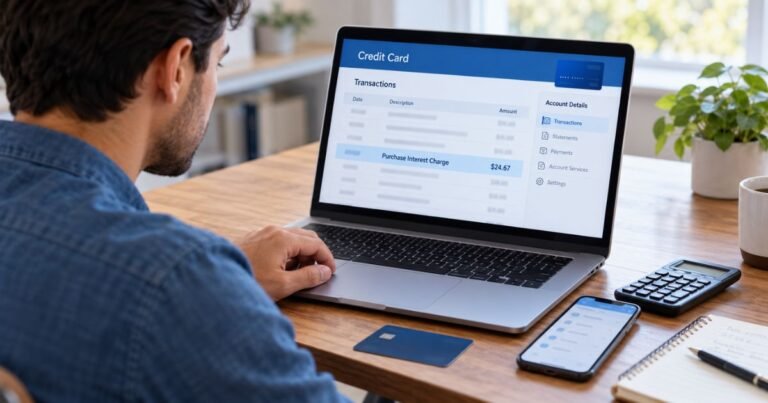
A finance charge on credit card statements can be confusing, especially if you don’t remember making a purchase for that amount. In most cases, a finance charge is not a merchant transaction. It is generally a cost your credit card issuer charges for borrowing money.
The charge most often represents interest on an unpaid balance. This guide explains why it appears, how issuers calculate it, and how you may be able to avoid future finance charges.
What Is a Finance Charge on a Credit Card?
A finance charge is generally the cost you pay for using credit. On a credit card statement, it most commonly means interest charged because you carried a balance instead of paying the eligible balance in full by the due date.
The CFPB explains that a credit card’s interest rate is the price you pay for borrowing money. Credit card interest rates are typically expressed as an annual percentage rate, or APR.
A finance charge may therefore appear even when you haven’t made any unusual purchases. It is usually generated by your card issuer rather than by an outside merchant.
Why Did You Get a Finance Charge?
The most common reason is that you did not pay your full statement balance by the due date.
For example, suppose your statement balance was $1,000 and you paid only $100. You generally still owe $900, and your card issuer may charge interest on the unpaid balance according to your card’s APR and billing terms.
Paying the minimum payment generally keeps the account from becoming past due, but it does not usually prevent interest. You generally need to pay the full eligible statement balance to avoid purchase interest when your card provides a grace period.
The CFPB says most cards let you avoid interest on purchases when you pay the balance in full by the due date each month.
Is a Finance Charge the Same as Interest?
On a credit card statement, the terms are often closely related.
Interest is generally the largest type of finance charge you will see. Your statement may label it as interest charge, finance charge, purchase interest charge, or similar wording.
Finance charges can have a broader meaning in lending. Certain costs associated with borrowing may be included when lenders calculate the overall cost of credit.
For everyday credit card use, though, a line called “finance charge” generally means the issuer charged you interest.
How Is a Credit Card Finance Charge Calculated?
Your exact calculation depends on your issuer and card agreement. Many credit card companies calculate interest using your daily or average daily balance.
The CFPB says many issuers calculate interest daily based on the average daily account balance. This means the amount you owe can change based on how much balance you carry and when payments or purchases post.
A simplified example may help.
Suppose you have:
- An average daily balance of $1,000
- A purchase APR of 24%
- A 30-day billing cycle
A 24% annual APR works out to roughly 0.0658% per day. Applied to a $1,000 balance for 30 days, the interest would be about $19.73.
That is only an illustration. Your issuer’s actual calculation may differ based on your balance, billing cycle, compounding method, payments, transactions, and applicable APR.
What Is APR?
APR stands for annual percentage rate. It generally shows the annualized cost of borrowing on your credit card.
A card may have several APRs. For example, purchases, cash advances, and balance transfers may each have different rates.
The CFPB notes that credit card issuers may charge different interest rates for different types of balances. Your statement generally must show the applicable APR for each balance category.
Your purchase APR is usually the most relevant rate when a finance charge comes from ordinary purchases.
What Is a Credit Card Grace Period?
A grace period is generally the time between the end of your billing cycle and your payment due date.
If your card offers a grace period and you are not carrying a balance, you can typically avoid purchase interest by paying your statement balance in full by the due date. The CFPB notes that most credit cards provide a grace period for purchases, although issuers are not required to offer one.
If you don’t pay the required balance in full, you may lose your grace period. Your issuer may then begin charging interest on eligible purchases according to your card agreement.
Paying in full and on time each month is generally the simplest way to keep a purchase grace period.
Why Did You Get a Finance Charge After Paying Off the Card?
This can happen because of residual interest, sometimes called trailing interest.
Interest may continue accumulating between the date your statement closes and the date your payment reaches the issuer. As a result, you may receive one more small interest charge on the following statement even after paying what appeared to be the full previous balance.
The CFPB explains that when you carry a balance, many credit card companies continue charging interest until they receive your payment. Your issuer’s specific rules should be explained in your cardholder agreement.
If you paid your card off but still see a small finance charge, call the number on the back of the card. Ask whether the amount is residual interest and what amount you need to pay to bring the account fully to zero.
Can Cash Advances Cause Finance Charges?
Yes. Cash advances can generate finance charges quickly.
A cash advance generally occurs when you use your credit card to withdraw cash or make another transaction your issuer classifies as a cash advance. These transactions often have a different APR from ordinary purchases.
Cash advances usually do not receive the same grace period as purchases. The CFPB says interest on a cash advance generally starts from the date of the transaction, and the APR may be higher than the purchase rate.
You may also be charged a separate cash advance fee. Check your statement and card agreement before using a credit card for cash.
Do Balance Transfers Cause Finance Charges?
They can.
A balance transfer moves debt from one card to another. Some cards offer a promotional 0% or low APR for a limited period, but they may also charge a balance transfer fee.
Once the promotional period ends, any remaining balance may begin accruing interest at the applicable APR. Your specific terms may vary by issuer and offer.
A balance transfer can also affect how interest applies to new purchases. Check whether your card provides a purchase grace period while you are carrying the transferred balance.
How to Avoid Finance Charges
The most reliable approach is generally to pay your full statement balance by the due date every month.
If possible, avoid carrying balances from one billing cycle to the next. You can also reduce interest by making additional payments during the month because many issuers calculate interest using daily balances.
Review your card’s APRs before using cash advances or balance transfers. These transactions may have different rates and different grace-period rules.
You can also set up autopay for the full statement balance. Just make sure there is enough money in your bank account on the payment date.
What if the Finance Charge Looks Wrong?
First, compare the charge with your card’s APR and the interest section on your statement. Your statement should generally separate balances that are subject to different APRs.
Check whether you carried a balance from the previous month, took a cash advance, completed a balance transfer, or recently lost a promotional APR.
If you still can’t explain the finance charge, call your issuer using the number on the back of your card. Ask which balance created the charge, which APR applied, and how the amount was calculated.
You can also request a copy of your cardholder agreement. That document generally explains your interest calculation method, grace period, APRs, and applicable fees.
FAQs On Finance Charge on Credit Card
Q: Why was I charged a finance charge if I made the minimum payment?
A: The minimum payment generally prevents your account from becoming delinquent, but it does not usually eliminate interest. You typically need to pay the full eligible statement balance by the due date to avoid purchase interest when your card has a grace period.
Q: Does a finance charge mean I am late?
A: Not necessarily. You can make your minimum payment on time and still receive a finance charge because you carried part of your balance into the next billing cycle.
Q: Can I ask my credit card company to remove a finance charge?
A: You can ask, but removal is not guaranteed. An issuer may sometimes waive a charge as a courtesy, especially if there was a billing issue, but its policies may vary.
Q: Will I get a finance charge every month?
A: You may continue receiving finance charges while you carry an interest-bearing balance. If your card has a purchase grace period, paying the eligible statement balance in full and on time may generally help you avoid future purchase interest.
Conclusion
A finance charge on credit card statements generally means you were charged interest for borrowing money or carrying an eligible balance. It can come from unpaid purchases, cash advances, balance transfers, or residual interest.
Check your statement’s APR and interest sections to identify the source. Paying your eligible statement balance in full by the due date is generally the best way to avoid purchase finance charges when your card provides a grace period.
Disclaimer: This article is for informational purposes only and isn’t financial or legal advice. Credit card interest calculations, APRs, fees, and grace periods may vary by issuer and account. Verify account-specific questions directly with your credit card company or bank.