What Is WHSSN Charge on Credit Card?

A WHSSN charge on your credit card is not a universally documented merchant descriptor, so its exact source cannot be confirmed from the five letters alone. WHSSN has been used as an abbreviation for the former Washington Health System School of Nursing in Pennsylvania, now called the UPMC Washington School of Nursing. That is a plausible lead if you recently paid school-related expenses, but no official source reviewed confirms that WHSSN is the school’s current credit card billing name.
Before assuming the payment concerns tuition or medical care, ask your card issuer for the complete merchant details. Check receipts only if they match the amount, location, and date. Report unauthorized activity promptly.
What Is WHSSN Charge on a Credit Card?
Some payment descriptions consist of shortened organization names. “WHSSN” is a recognizable abbreviation for Washington Health System School of Nursing, as shown in older school documents and other educational references. The school has existed for many years in Washington, Pennsylvania.
In February 2026, UPMC announced that the former Washington Health System School of Nursing had become the UPMC Washington School of Nursing. The renamed institution still offers a nursing education program. That confirms the organization and name history, but it does not provide proof that the letters WHSSN on a bank statement identify a school payment.
Why the abbreviation may be misleading
A statement descriptor may be truncated, use a payment processor name, or contain internal business abbreviations. Two separate merchants can also have similar short labels. The issuer’s transaction details are more reliable than an online guess.
For example, if your statement shows WHSSN with a Pennsylvania location and you recently enrolled in nursing courses, checking the former school name makes sense. If you have no connection with the area or institution, do not assume that is the answer.
Could it be linked to a nursing school?
Possibly. Historical Washington Health System documents use the WHSSN abbreviation for its nursing school. UPMC confirms the institution’s new name and continuing nursing education programs as of 2026. Students may pay various education-related expenses according to applicable school terms.
However, a school’s existence and its fees are not evidence that a card charge labeled WHSSN came from that school. Obtain an invoice and merchant confirmation first. Avoid treating older published fee amounts as the current cost of tuition or applications.
Is WHSSN the same as a hospital bill?
Not necessarily. The school is associated with the wider UPMC Washington system, but medical services and education programs can have different billing offices and merchant descriptors. A visit to a hospital does not prove a transaction using the school abbreviation is a medical bill.
If you have recently paid for healthcare, review the provider’s patient statement and payment confirmation. If the charge concerns school-related expenses, check student account records instead. Ask the card issuer which payee actually received the money.
How to verify the charge step by step
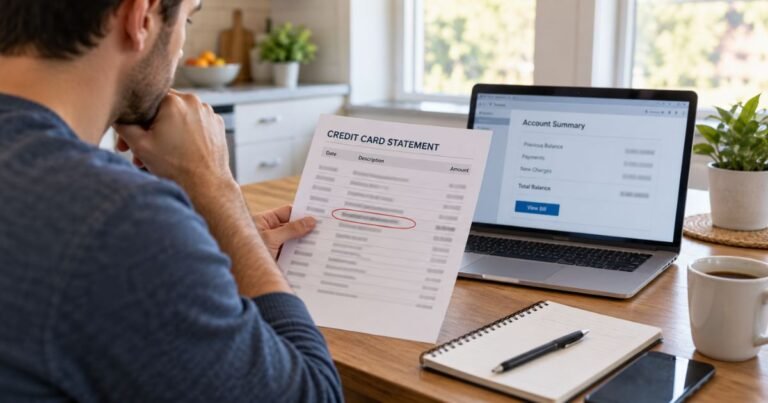
- Open the card’s detailed transaction view and record the exact text, amount, date, and location.
- Determine whether the charge is pending or posted.
- Search email and receipts for a transaction with the same amount.
- If relevant, review recent nursing-school applications, tuition payments, or institutional invoices.
- Contact the institution through its official UPMC Schools of Nursing information to ask about the correct billing office.
- If no authorized payment matches, contact your credit card issuer immediately.
Do not send your full account number, credit card security code, or sensitive school and medical records through an unverified website. A legitimate institution will have official billing and contact channels for account questions.
What if the transaction was made by another authorized user?
Someone who has permission to use your card may have paid an application fee, course expense, or another unrelated purchase. Ask that user for a receipt and confirm the transaction, while respecting their privacy.
If nobody authorized the charge, ask the issuer to investigate. Do not label the transaction legitimate merely because someone in your household has a connection to the Pennsylvania school.
Why the date may not match your receipt
Credit card authorizations and final settlements can appear on different days. The bank’s posting date can therefore be later than the merchant’s payment confirmation. Search a few days around the listed date.
Compare the exact posted amount and merchant data. An identical amount by itself is insufficient to confirm a match, especially if you have several transactions that occurred on the same date.
How to ask UPMC about the possible connection
Use the official UPMC website to identify the current school or billing department. Explain that you have a card transaction whose abbreviation resembles the institution’s former name. Ask whether the school uses that payment description or can confirm a specific invoice.
Keep in mind that the person you reach may not manage payment processing. If the institution cannot confirm the billing descriptor, rely on the issuer’s investigation rather than assuming the school must be responsible.
What if your issuer provides a different location?
A merchant location is another clue, but it is not always the place a cardholder physically visited. Online payments can show a processor or headquarters address. Compare the additional details with your receipts and account history.
If the bank provides a merchant category or customer-service telephone number, verify it independently before calling. Do not trust a suspicious number sent by a stranger claiming to reverse the charge.
Can WHSSN be a fraudulent transaction?
Yes, an unexplained transaction can be unauthorized no matter how familiar the abbreviation looks. But the label alone cannot demonstrate fraud either. The key question is whether you or someone with permission approved the underlying payment.
Contact the issuer promptly for suspected unauthorized use. Ask about temporary card controls, investigation, and whether the card should be replaced. Review nearby transactions for additional surprises.
How to dispute the charge correctly
Describe the facts to the issuer: the exact descriptor, the amount, whether the merchant could be identified, and why you believe the payment is unauthorized or incorrect. Keep the case number and any relevant emails or receipts.
For qualifying credit card billing errors, the CFPB advises sending written notice within 60 calendar days after the statement containing the error was sent. Continue paying amounts that are not in dispute on time.
What if the charge appears repeatedly?
Repeated payments could indicate scheduled billing, installment arrangements, repeated purchases, or account misuse. The descriptor alone does not identify a subscription. Ask the issuer whether it sees recurring-payment information and seek the actual merchant agreement.
If a legitimate recurring arrangement exists, cancel it through the proper provider. If no authorization can be established, request account protection from your issuer. See how to stop unwanted credit card charges.
Prevent future confusion
Keep receipts for tuition, healthcare, and other larger purchases, and enable card alerts. Review both posted and pending charges, especially after making a payment through a third-party portal.
Our general unknown-charge guide can help you identify unfamiliar names before filing a dispute.
Official sources
- UPMC: School of Nursing Name Change in 2026
- UPMC: Schools of Nursing and Student Aid
- CFPB: Credit Card Dispute Procedure
FAQs About WHSSN Credit Card Charges
Q. What does WHSSN stand for?
A. The abbreviation has been used for Washington Health System School of Nursing, but that does not establish the identity of a card transaction.
Q. Did the nursing school change names?
A. Yes. UPMC announced its change to UPMC Washington School of Nursing in February 2026.
Q. Does WHSSN definitely mean hospital billing?
A. No. We did not find an official statement confirming that WHSSN is a current hospital or school card descriptor.
Q. What if I have no connection with the school?
A. Request the issuer’s full merchant details and promptly report a transaction nobody authorized.
Conclusion
A WHSSN charge on a credit card needs further verification. The abbreviation is associated with the former Washington Health System School of Nursing, but an issuer or matching invoice must confirm the actual merchant. Report any payment you did not authorize promptly.
Disclaimer: This article is general U.S. consumer education, not financial, legal, or medical advice. Merchant identification cannot be established from an abbreviation alone, and account information must be confirmed directly.