What is Magnus Technology LLC Charge on Credit Card?

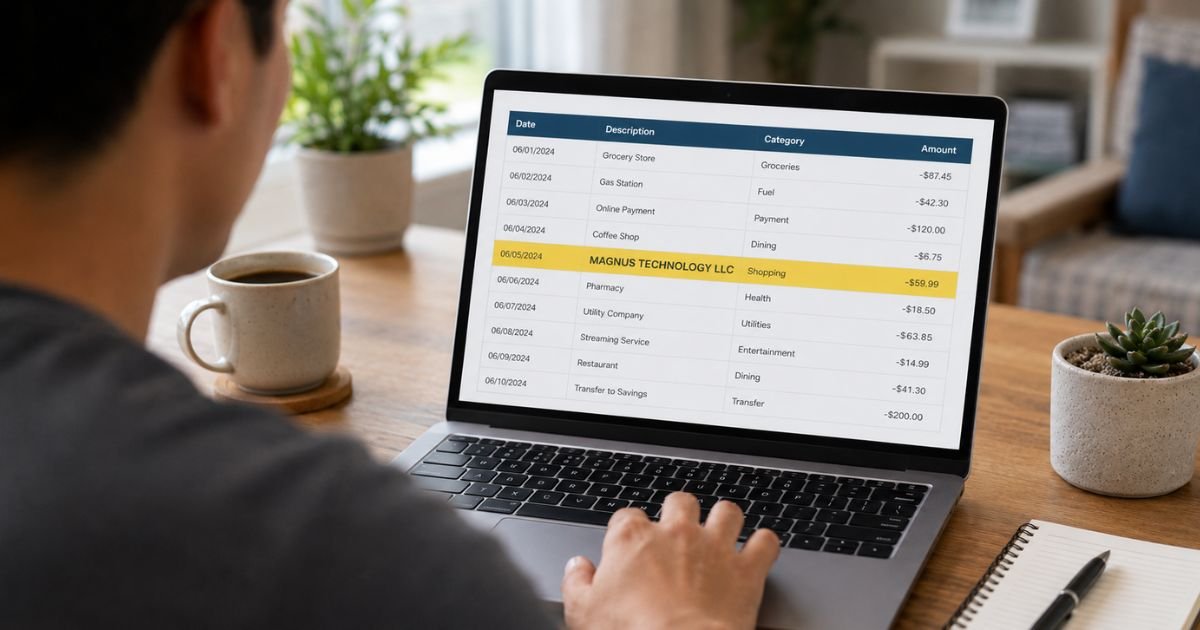
You check your credit card statement and see a charge from Magnus Technology LLC. The name may not ring a bell, and that can make the charge feel unexpected.
In most consumer cases, this descriptor links to an online service called Cheaterbuster. Understanding the connection helps you confirm whether the charge is yours and decide what to do next.
This guide explains what the charge usually means, typical amounts, and the practical steps to take.
Quick Answer
A Magnus Technology LLC charge on credit card is most often a payment for Cheaterbuster, an online service that searches for dating app profiles.
The company operates cheaterbuster.com. Charges are typically for individual searches or search packs (often in the $18–$35 range).
Check your email for receipts from Cheaterbuster, review the account if you have one, and contact support or your card issuer if the charge is unrecognized.
What Is Magnus Technology LLC?
Magnus Technology LLC is the company listed as the operator of Cheaterbuster (cheaterbuster.com). Cheaterbuster is a paid online tool that claims to help users search for potential dating app profiles, particularly on Tinder, using details such as a name, age, location, or photo.
It is marketed as a way to check whether someone may have an active profile on dating platforms. The service has operated under related names in the past and uses facial recognition or public data signals according to its own descriptions.
Other businesses use similar “Magnus Technology” names (for example, trucking software or consulting firms), but consumer credit card charges under “Magnus Technology LLC” most commonly trace back to Cheaterbuster purchases.
Why Does the Charge Appear?
You (or someone with access to your card) likely made a purchase on cheaterbuster.com. Common triggers include:
- Buying a single search or a pack of searches
- Unlocking additional results or profiles after an initial payment
- Accidental or repeated checkouts during the process
- A subscription or recurring option that was selected
Because the legal entity name appears on the statement instead of “Cheaterbuster,” the charge can look unfamiliar even if the purchase was intentional.
Typical Amounts
Reported prices for Cheaterbuster searches often fall in these ranges:
- Single search: around $18–$22
- Multi-search packs: roughly $30–$35
Some users have reported multiple charges in a short period or higher totals after unlocking extra results. Exact amounts can vary by promotion, taxes, or the number of searches purchased.
How to Confirm the Charge
- Search your email (including spam) for messages from Cheaterbuster, Magnus Technology, or receipts around the charge date.
- Check whether you or anyone who uses the card visited cheaterbuster.com and completed a checkout.
- Log into any Cheaterbuster account associated with the email used for the purchase and review order history.
- Expand the full transaction details in your banking app for any extra reference information.
Matching the date and amount to an email receipt is usually the fastest confirmation.
What to Do If You Recognize the Charge
If the purchase was intentional:
- Contact Cheaterbuster support at the email listed on their site (commonly support@cheaterbuster.email or similar) for questions about results or refunds.
- Review their terms for any refund window or policy.
- If a recurring option was activated, request cancellation through the account or support.
Keep copies of receipts and any support correspondence.
What to Do If You Do Not Recognize the Charge
- Contact your credit card issuer using the number on the back of your card.
- Report the charge as unauthorized and ask them to investigate.
- Request that future charges from this merchant be blocked if appropriate.
- Consider replacing the card if you suspect the number was compromised.
- Optionally email Cheaterbuster support with the transaction details to ask whether an account exists under your information. Do not share full card numbers.
Act relatively quickly. Credit card dispute windows are often limited (commonly 60 days from the statement date under U.S. rules).
Document everything with screenshots and notes.
Common Issues Users Report
Some customers have described:
- Multiple charges after what they believed was a single payment
- Difficulty stopping additional billing
- Results that felt incomplete or required further payment to unlock
- Challenges reaching support or obtaining refunds
Reviews of the service are mixed. Some users find the information useful; others question accuracy or the billing experience. Treat any unrecognized charge seriously regardless of the company’s legitimacy.
Practical Tips
Enable real-time transaction alerts on your credit card.
Be cautious with sites that use pay-per-search or multi-step unlock models, especially when emotional decisions are involved.
Use a virtual card number for one-time online services when your bank offers one.
Review statements weekly so unfamiliar charges are noticed early.
FAQs On Magnus Technology LLC Charge on Credit Card
Is Magnus Technology LLC a real company?
Yes. It is the legal entity listed as operating Cheaterbuster. The charge is typically tied to a purchase on that site rather than a completely fabricated merchant.
Why doesn’t the statement say Cheaterbuster?
Many online services bill under their legal company name. Magnus Technology LLC is the entity that appears on statements for these transactions.
Can I get a refund?
It depends on the timing, the specific purchase, and the company’s policy. Contact Cheaterbuster support with your receipt details and also open a dispute with your card issuer if needed.
What if someone else used my card?
Report the charge to your card issuer as unauthorized right away. Ask them to block further activity from the merchant and consider a new card number.
Conclusion
A Magnus Technology LLC charge on credit card is most often a payment for Cheaterbuster, an online dating-profile search service. The company name appears on the statement instead of the product brand, which is why the charge can look unfamiliar.
Start by searching your email for Cheaterbuster receipts and checking whether a purchase was made. If you recognize it, manage any refund or cancellation through their support.
If you do not recognize it, contact your card issuer promptly to dispute the charge. Reviewing your statements regularly and using transaction alerts helps catch these situations early.
Disclaimer: This article is for general informational purposes only and does not constitute financial, legal, or professional advice. Company policies, pricing, and billing practices can change. Always verify details directly with the merchant through official channels and with your card issuer. If you suspect fraud, report it promptly to your financial institution.