What Is E420 Charge on Credit Card?

An E420 charge on your credit card cannot be reliably assigned to a specific merchant from “E420” alone. Public searches for this short code return unrelated products and technical identifiers, but we could not verify an official payment-provider or merchant statement explaining that E420 is its billing descriptor. The safest next step is to open the complete card transaction and ask your issuer for the actual merchant details.
Do not assume E420 means a particular subscription, retailer, service fee, or fraud scheme. A short identifier could be part of a longer statement name, a merchant reference, or information displayed by your bank. The complete posted transaction is more useful than the four characters alone.
What Is E420 Charge on a Credit Card?
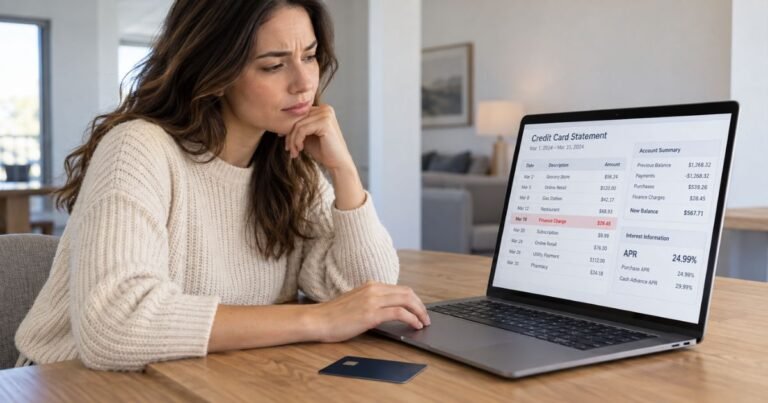
Credit card statements use merchant descriptions sent through payment networks and adapted by the issuing bank. A bank may shorten a name, place a city or category beside it, or display a reference code. Without the rest of the transaction details, a four-character label is not enough to establish the payee.
The publicly available sources reviewed for this guide did not identify a recognized merchant that officially uses E420 as a standard card billing name. That is a limitation of the evidence, not proof that the charge is fraudulent or that no legitimate business could use the code.
Could E420 be a transaction code?
Possibly. Some banks add their own internal notation or show information returned by the payment processor. However, the exact meaning of E420 in your statement is not established. Do not interpret it as a merchant category code or a standard card-network error number without an issuer explanation.
If the entry says “E420” beside another merchant name, read both fields together. The merchant name may be the actual payee while E420 is a reference. Ask the card issuer which field identifies the business and which is merely transaction metadata.
Why online searches may give conflicting answers
Short codes are easy to confuse with product models, technical parts, order references, geographic identifiers, and unrelated abbreviations. The same sequence of letters and numbers can occur in many industries without representing one company.
A website that identifies E420 as a specific merchant without giving an official billing source, invoice, or real transaction evidence is not a reliable basis for deciding what your bank charged. Cross-check any suggestion through your issuer.
How to identify the E420 charge
- Open the transaction in your issuer’s mobile app or online banking portal.
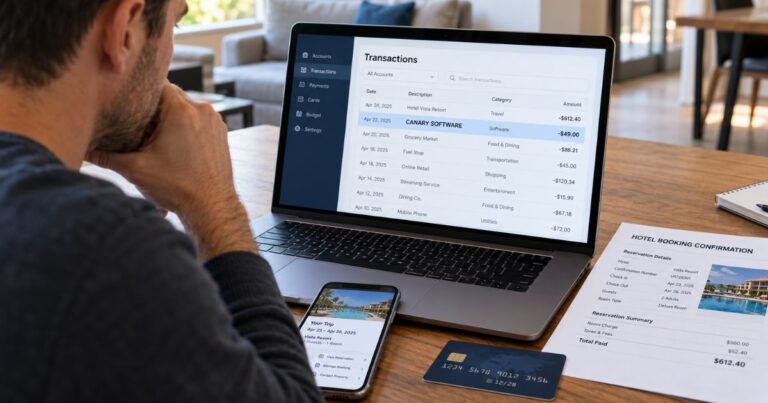
- Record the exact descriptor, amount, transaction date, posting date, and any city or web address.
- Look for additional merchant information available when you expand the entry.
- Compare the amount with recent receipts, subscriptions, bills, and online purchases.
- Ask any authorized card users whether they recognize the payment.
- Call your issuer using the number on the back of your card if no authorized purchase matches.
Do not enter your entire card number into an unfamiliar search website promising to decode the charge. Only use the official bank app, your issuer’s secure support channels, and recognized merchants you can verify independently.
What details should you request from the issuer?
Ask for the full merchant descriptor, the merchant location, available telephone number, the transaction method, and any merchant category information. The issuer may not disclose every data field, but it should be able to explain the options for researching or disputing an unfamiliar purchase.
Tell the agent whether the transaction was pending or posted when you first noticed it. Ask if the apparent merchant name is truncated and whether a longer name exists in the payment record.
What if E420 is a pending authorization?
A pending credit card transaction may temporarily reduce your available credit before it settles. Some authorizations disappear without becoming posted purchases. Others change when the merchant completes the sale.
Check the status before concluding that a pending entry is a finalized debit. If the transaction looks unauthorized, contact the issuer promptly regardless of status. Waiting for a fraud concern to post can unnecessarily delay card protection.
Could E420 be a recurring charge?
Repeating amounts can indicate a subscription, payment plan, regularly purchased service, or recurring unauthorized use. But no official evidence reviewed establishes E420 as a subscription provider. Check the exact dates and whether the issuer can identify a recurring billing relationship.
If the bank identifies a real subscription you signed up for, use the merchant’s official cancellation method. Save confirmation and check subsequent statements. If no authorized agreement exists, ask the issuer how to dispute and prevent future payments.
What if a small E420 charge appears?
Small transactions can be legitimate purchases, temporary authorizations, or unauthorized attempts. There is no reliable dollar amount that proves one explanation or another. If you did not authorize the charge, report it regardless of its size.
Check nearby transactions as well. Multiple unusual charges or a sudden change in account activity may support a broader fraud review. Ask the issuer whether a replacement card or new account credentials are appropriate.
What if the amount matches an online purchase?
A matching amount is a clue, not final verification. Compare the transaction date, business name, order receipt, and payment method. Two unrelated purchases can have identical totals.
If you suspect a merchant’s shortened descriptor, contact the seller through its verified website and ask how its charges normally appear. Keep the merchant’s response in case you need it during a billing dispute.
Can you get an E420 payment refunded?
Refund eligibility depends on what the charge actually is. If it is a merchant purchase you recognize, contact that merchant about an incorrect amount, canceled order, or eligible return. A refund may appear as a separate credit after processing.
If you never authorized the payment, ask your issuer to investigate rather than relying on an unknown company to offer a refund. The CFPB explains that qualifying billing errors have a written-notice process and time limits.
How to dispute an unauthorized E420 charge
Report the precise facts: the descriptor, amount, date, and reason you do not recognize it. The issuer can tell you whether to use its fraud-reporting process or a billing error dispute. Save the case number and evidence you provide.
For certain U.S. credit card billing errors, send a written notice within 60 calendar days after the statement containing the error was sent. Use the billing-dispute address, which can differ from the payment address. Continue paying undisputed portions of your account.
How to avoid future unidentified charges
Enable card transaction alerts and keep purchase receipts until they appear on the statement. Regularly review saved cards in shopping accounts. Ask the issuer about freezing the card temporarily if you see suspicious activity.
Our guide to unidentified credit card charges explains more ways to review unfamiliar descriptors, while stopping an unwanted card charge covers protective measures.
What this guide cannot confirm
We cannot responsibly claim that E420 is a specific business, a legitimate recurring membership, or a confirmed scam without an official source linking that exact descriptor to an organization. The name might be accompanied by additional information on an actual card statement that changes the answer.
If you have a complete descriptor with a city or web address, that information can narrow the search substantially. The issuer’s merchant record remains the best starting point.
Official sources
- CFPB: Fixing Credit Card Billing Mistakes
- CFPB: Disputing a Card Charge
- CFPB: Credit Card Consumer Help
FAQs About E420 Credit Card Charges
Q. Is E420 a confirmed merchant name?
A. We could not verify an official merchant identification for E420 from public primary sources.
Q. Does E420 mean my card was hacked?
A. No. The code alone is not evidence of fraud. Review merchant details and report any payment you did not authorize.
Q. Should I wait for the charge to post?
A. A routine pending authorization may change, but report suspected unauthorized activity promptly even while it is pending.
Q. Can the issuer identify E420?
A. The issuer may have full merchant details not shown in your transaction summary and can explain its dispute process.
Conclusion
An E420 charge on a credit card cannot be identified reliably from the code alone. Check the full transaction, compare authorized purchases, and ask the card issuer to investigate when the merchant remains unknown.
Disclaimer: This article is general U.S. consumer education, not individual financial or legal advice. It does not establish a particular merchant identity or the legitimacy of an individual transaction.