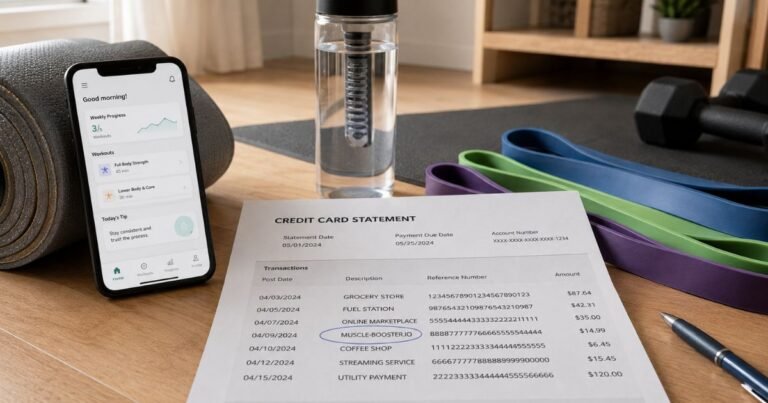
What is ACCB UK Charge on Credit Card Statement?

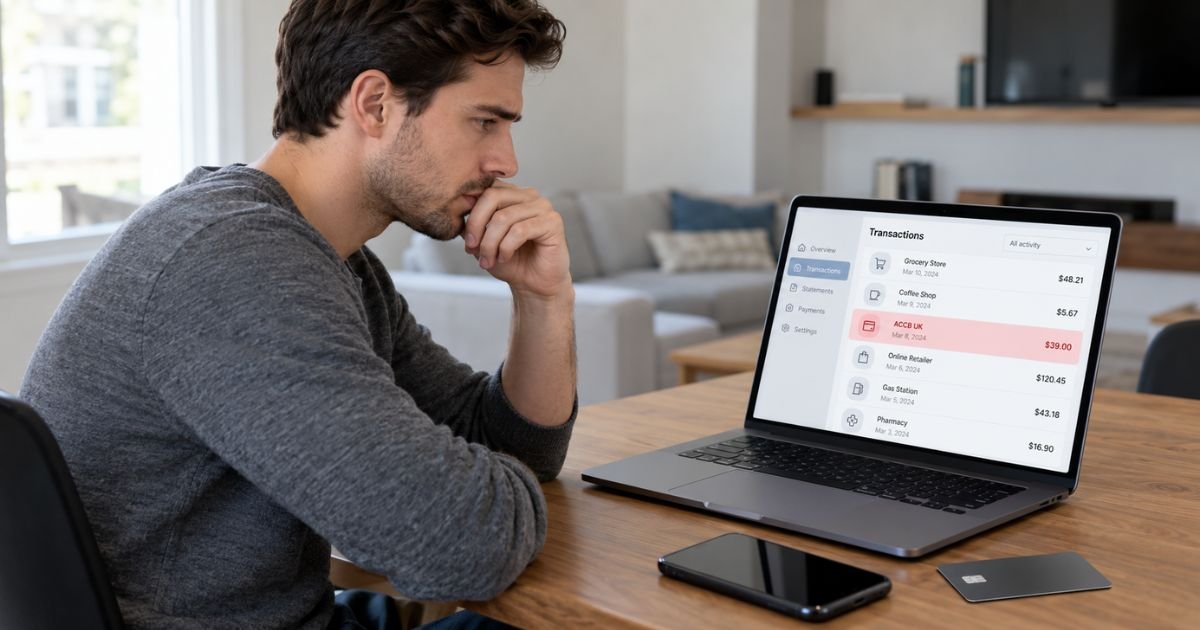
An ACCB UK charge on credit card can feel confusing if you don’t remember buying anything from a company called ACCB. An unfamiliar descriptor is often legitimate, but the short wording may not tell you which business actually received your payment.
There isn’t enough reliable public information to connect ACCB UK to one specific merchant with confidence. You should generally use the amount, date, full descriptor, and merchant details from your bank to identify the transaction.
What Is an ACCB UK Charge on Credit Card?
An ACCB UK charge on credit card is generally a card transaction using ACCB as part of its merchant or payment descriptor. The UK portion typically suggests that the merchant account or payment processing location has a connection with the United Kingdom.
However, the descriptor alone does not reliably identify one company. Several unrelated organizations use the initials ACCB, including businesses and nonprofit organizations registered in the UK.
Because of that, you should not assume a particular ACCB organization caused your charge based only on a web search. Your bank’s complete transaction record is generally a better source for identifying the merchant.
Is ACCB UK a Specific Company?
It is not possible to confirm one specific merchant from the wording ACCB UK alone. Public business records show several unrelated organizations using ACCB in their names.
For example, there are UK entities with names such as ACCB Limited, ACCB LLP, and organizations using ACCB as an abbreviation. That does not mean any of these organizations charged your card.
A merchant descriptor can also be shortened by a payment processor or card issuer. The name you see may therefore contain only a small part of the merchant’s legal or trading name.
What Does UK Mean in the Descriptor?
The UK portion generally refers to the United Kingdom. It may indicate the merchant’s registered location, payment account location, or the country connected with the transaction processor.
It does not necessarily mean you physically bought something in the UK. You may have made an online purchase from a business that processes payments through a UK entity.
If you live outside the UK, check whether your card issuer added a separate foreign transaction or currency conversion fee. These fees generally come from your bank rather than the merchant.
Could ACCB UK Be an Online Purchase?
Yes, it may be. Short merchant descriptors often appear with online transactions because the legal business receiving the payment can have a different name from the website you visited.
Think about websites, apps, digital services, charities, membership organizations, or other online businesses you recently used. The transaction amount may be more useful than the ACCB initials.
You should also check purchases made several days before the posting date. Card transactions may generally take some time to move from pending to posted.
Could ACCB UK Be a Subscription?
Possibly, but the descriptor itself does not confirm that. ACCB UK may represent either a one-time transaction or a recurring payment.
If you see the same charge every month, quarter, or year, you may be dealing with a membership or subscription. Check your email for renewal notices and recurring payment confirmations.
If the charge appears only once, it may simply be an individual purchase, donation, registration fee, or another payment. You should verify the merchant before attempting to cancel anything.
How to Identify an ACCB UK Charge
Start by opening the transaction inside your bank’s website or mobile app. The main statement screen may show only ACCB UK, while the detailed view may contain more information.
Look for details such as:
| What to check | What may help you |
|---|---|
| Full merchant descriptor | Extra words after ACCB |
| Transaction amount | Match it with a receipt |
| Transaction date | Compare it with recent purchases |
| Merchant location | Look for a UK city or address |
| Phone number | May identify the merchant |
| Website | May show the business involved |
| Currency | Check whether it was GBP or another currency |
| Recurring indicator | May show a subscription payment |
Your card issuer may have more merchant data than your banking app displays. Calling the number on the back of your card can therefore be useful.
Search Your Email for a Matching Payment
Search your email for the exact transaction amount. This often works better than searching only for “ACCB.”
You can also search terms such as receipt, payment, order, subscription, membership, renewal, and UK. Check your spam and promotions folders as well.
Look at emails from the days surrounding the transaction. The business name in your receipt may be completely different from the descriptor on your statement.
Check Other Authorized Card Users
Ask anyone who has permission to use your card whether they recognize the transaction. A spouse, family member, or employee may have made the purchase.
Also check digital wallets where your card is saved. A transaction made through Apple Pay, Google Pay, PayPal, or another payment service may be easier to recognize in that service’s history.
Do not assume a charge is fraudulent simply because you personally do not remember it. You should generally complete these checks first.
Could ACCB UK Be a Charity or Donation?
It is possible because at least one UK charitable organization uses ACCB as an abbreviation. However, there is no reliable evidence that every ACCB UK statement charge is connected to that organization.
If you recently made a donation, paid an event fee, or supported an organization online, compare the amount with your confirmation email.
You should avoid identifying the charge as a charity payment unless your receipt or bank’s merchant details confirm that connection.
What If the Amount Is Different From Your Purchase?
A small difference may generally come from currency conversion, taxes, or card issuer fees. This can happen when a UK merchant processes a payment in British pounds.
Your issuer may use its own exchange rate when converting the transaction. It may also charge a foreign transaction fee depending on your card agreement.
However, you should not assume currency conversion explains a large difference. Compare the original receipt with the amount and currency shown in your bank account.
How to Stop a Recurring ACCB UK Charge
First identify the actual merchant. You generally cannot reliably cancel a payment using only the ACCB UK descriptor.
Once you know the company, sign in to the account connected with the purchase. Look for options such as Subscription, Membership, Billing, or Automatic Renewal.
Follow the company’s cancellation process and keep the confirmation. If you cannot find an account, contact the merchant using verified contact information from its official website or your receipt.
Canceling your card may not cancel the underlying agreement. The merchant may still consider the subscription active until you properly cancel it.
Can You Get an ACCB UK Charge Refunded?
A refund may be possible depending on the merchant, purchase type, and applicable policy. You should generally identify the seller before requesting one.
If you recognize the merchant but disagree with the transaction, contact the company and explain the issue. Keep copies of your receipt, cancellation confirmation, and correspondence.
Your bank may also offer a dispute process when a merchant does not resolve a legitimate billing problem. Refund and dispute outcomes may vary by issuer.
What If You Do Not Recognize ACCB UK?
If you cannot connect the charge to any purchase, contact your card issuer. Ask the representative for the full merchant name and merchant details associated with the transaction.
Banks can generally access information that does not appear on your regular statement. This may include a merchant category, location, contact information, or additional descriptor data.
If you still do not recognize the merchant and nobody authorized the transaction, tell your issuer that the charge may be unauthorized. Your bank may recommend locking or replacing your card.
Use only the number printed on your card or your bank’s official app. You should generally avoid contact numbers listed on unverified charge-identification websites.
Should You Dispute an ACCB UK Charge?
You may generally dispute the payment if you confirm that neither you nor another authorized cardholder made it. You may also have dispute options for duplicate charges or unresolved billing problems.
Before disputing a legitimate-looking transaction, ask your issuer to identify the merchant. This can prevent you from accidentally disputing a purchase you made under a different business name.
If the payment appears unauthorized, contact your issuer promptly. Your dispute rights and deadlines may vary by issuer and card type.
FAQs On ACCB UK Charge on Credit Card
Q: What does ACCB UK mean on my credit card?
A: ACCB UK generally appears to be a shortened merchant or payment descriptor. The exact merchant cannot be reliably identified from those words alone, while UK typically indicates a connection with the United Kingdom.
Q: Is ACCB UK a recurring subscription?
A: It may be, but the descriptor does not prove that. Check whether similar amounts appear regularly and review your subscription and membership receipts.
Q: How can I find out who ACCB UK really is?
A: Open the full transaction details or call the number on the back of your card. Ask your issuer for the complete merchant name, location, contact information, and any additional descriptor details.
Q: What should I do if I never authorized ACCB UK?
A: Check your receipts, digital wallets, and purchases made by other authorized card users first. If you still cannot identify the payment, contact your card issuer and report the transaction as potentially unauthorized.
Conclusion
An ACCB UK charge on credit card cannot be reliably linked to one specific merchant from the descriptor alone. The wording may represent an abbreviated business name, while UK generally points to a United Kingdom connection.
Check the full transaction information, receipts, and recent online payments first. If you still cannot identify the charge, ask your card issuer for the merchant’s complete details and dispute the payment if it was not authorized.
Disclaimer: This article is for general informational purposes only and isn’t financial or legal advice. Merchant descriptors, refund rules, foreign transaction fees, and dispute policies may vary by issuer. Verify account-specific questions directly with the merchant or your bank.