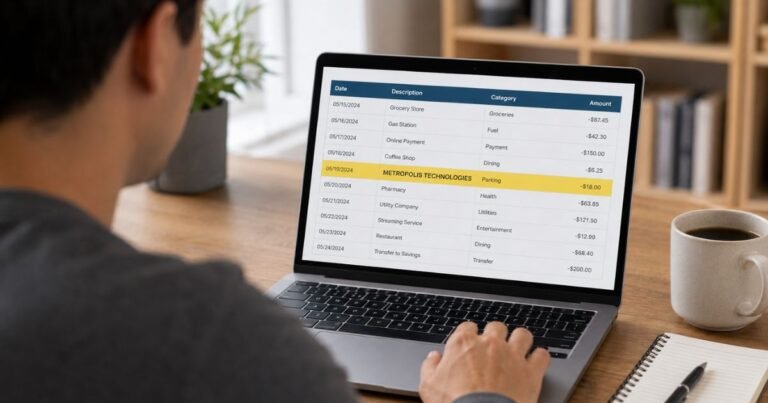
What is AMTC INC Charge on Credit Card?

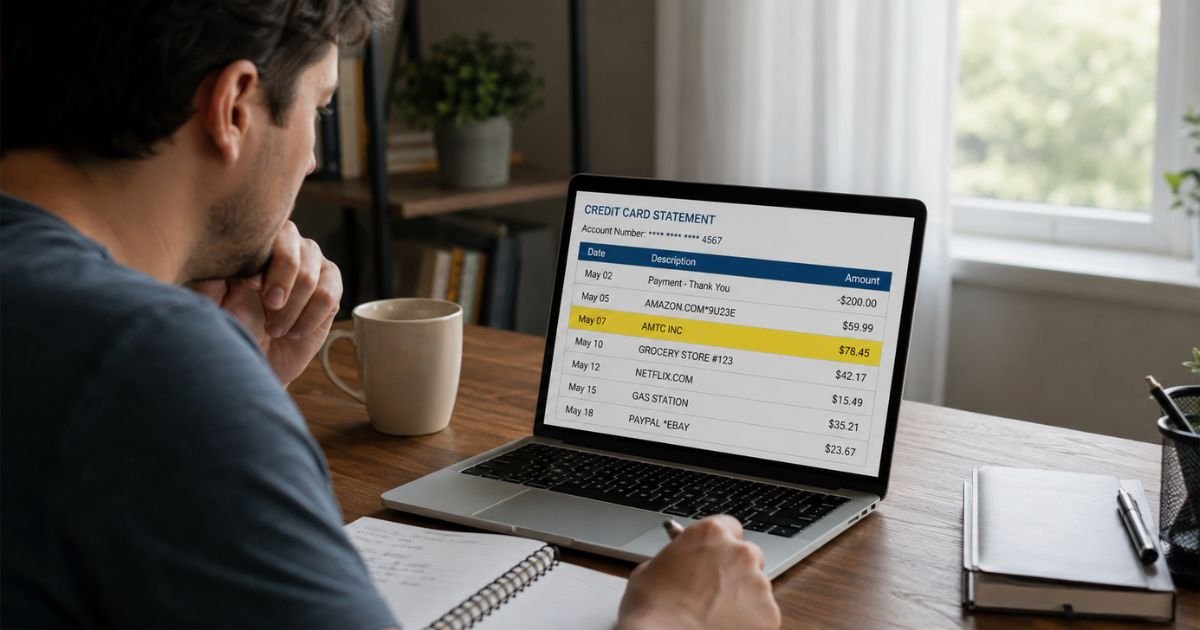
Finding an unfamiliar charge on credit card statement can feel stressful. You open the app or paper bill, spot “AMTC INC,” and have no idea what it is.
You’re not alone. Merchant names on statements often look different from the brand names you know. The descriptor can be shortened, use a legal company name, or come from a payment processor.
This guide walks you through what an AMTC INC charge usually means, how to track down the source, and exactly what to do if you don’t recognize it.
Quick Answer
An AMTC INC charge on credit card is typically a shortened billing descriptor used by a merchant, service provider, consulting firm, or product seller. It is not automatically fraud.
Check the full transaction details in your bank app, search your email for matching receipts, and ask household members who share the card. If it remains unknown, contact your card issuer right away to investigate or dispute it.
What Is AMTC INC Charge on Credit Card?
Credit card statements rarely show the friendly brand name you see online or in a store. Instead, they list a “merchant descriptor.” This is the name the company registered with the payment processor.
AMTC INC is one of those descriptors. It appears on credit cards, debit cards, and sometimes linked accounts like Cash App or PayPal. The letters alone do not point to one single famous consumer brand. Multiple unrelated businesses can use similar short names.
Common reasons this descriptor shows up include:
- A one-time purchase of a product or service
- A professional consulting or technical service invoice
- An event registration, training class, or membership fee
- A subscription or renewal you or someone else authorized
- A business-to-business order that was charged to a personal card
The amount, date, and any extra details in the transaction help narrow it down.
Possible Companies Linked to AMTC INC
Public records and business directories show a few organizations that use “AMTC” or “AMTC Inc” in their names.
One is Advanced Modern Technologies Corporation, based in Canoga Park, California.
This company designs and manufactures commercial washroom products such as touch-free flush valves, faucets, and soap dispensers for schools, hospitals, and airports.
Most of its sales are business-to-business, so a consumer charge would be less common unless you ordered products directly.
Another is AM Tech Consulting LLC, associated with the domain amtc-inc.com and located in the Canton, Georgia area. This firm appears to focus on technical and telecommunications consulting services for organizations.
Other small education, media, or service companies also appear in business databases under similar names. Because the descriptor is short and generic, the charge could also come from a completely different merchant that simply registered “AMTC INC” with its payment processor.
Do not assume any of these companies is the source until you match the date, amount, and location details from your statement.
Is the AMTC INC Charge Legitimate?
The charge can be completely legitimate if you or an authorized user made a matching purchase.
It becomes suspicious when:
- No one in the household recognizes the date or amount
- There is no confirmation email or receipt
- The charge is followed by other unknown small transactions (sometimes used as “test” charges)
- The merchant category or location does not match anything you recall
Most unrecognized charges are not fraud. They are often forgotten subscriptions, family purchases, or billing names that look different from the website you visited. Still, treat every unknown charge seriously until you confirm it.
How to Identify the Source of an AMTC INC Charge
Follow these practical steps in order. Most people solve the mystery within a few minutes.
- Open the full transaction details in your banking or credit card app. Look for any phone number, city, state, website, or extended merchant name that appears only when you expand the entry.
- Compare the exact date and dollar amount with recent purchases, event tickets, online orders, or invoices.
- Search your email (including spam and promotions folders) for “AMTC,” “AMTC Inc,” the exact amount, and words like “receipt,” “invoice,” “registration,” or “subscription.”
- Ask anyone who has access to the card, spouse, partner, adult children, or employees, if they made a purchase around that date.
- Review accounts where your card is saved: online stores, membership sites, training platforms, and subscription services.
- Check whether the charge is still pending. Some authorizations drop off or change name after a few days.
If these steps turn up nothing, move to the next section.
What to Do If You Still Don’t Recognize the Charge
Contact your card issuer as soon as possible. Use the phone number on the back of your card or in the official app, never a number you find in a random online comment.
Tell the representative:
- The exact date and amount of the AMTC INC charge
- That you do not recognize the merchant
- You want the full merchant details they have on file (sometimes more information appears on their side)
Your issuer can usually:
- Provide additional descriptor information
- Place a temporary hold or freeze on the card
- Start a formal dispute or fraud claim
- Issue a replacement card if needed
Under U.S. law, your liability for unauthorized credit card charges is generally limited to $50 if you report promptly, and many issuers offer zero-liability protection. Report quickly, waiting can complicate the process.
Save screenshots of the charge, any emails, and notes from your call. If the issuer confirms it is unauthorized, they will typically reverse the charge and monitor the account.
Common Mistakes to Avoid
- Ignoring a small charge. Fraudsters sometimes test a card with a low amount before larger purchases.
- Calling a phone number you find through a general web search instead of using the number on your card.
- Sharing your full card number, CVV, or personal details with anyone who contacts you about the charge.
- Assuming the charge is safe just because the name sounds somewhat familiar.
- Waiting weeks to investigate. Timely reporting protects your rights.
Expert Tips for Preventing Future Unknown Charges
Set up real-time transaction alerts in your bank or card app so you receive a text or notification for every charge.
Review statements weekly instead of waiting for the monthly bill.
Use virtual card numbers or single-use cards for online trials and new merchants when your issuer offers them.
Keep a simple note or spreadsheet of recurring subscriptions so you can match them quickly.
FAQs On AMTC INC Charge on Credit Card
What should I do first when I see an AMTC INC charge?
Open the full transaction details in your banking app and search your email for matching receipts or the exact amount. Then ask anyone who shares the card.
Can AMTC INC be a scam?
The descriptor itself is not proof of a scam. Many legitimate businesses use abbreviated names. Treat it as unknown until you confirm the source, then dispute promptly if it is unauthorized.
How long do I have to dispute an unrecognized charge?
Contact your issuer as soon as you notice it. Federal rules give you strong protections when you report billing errors or unauthorized use quickly, ideally within 60 days of the statement date for formal disputes.
Will disputing the charge hurt my credit score?
No. A legitimate dispute or fraud claim does not lower your credit score. Paying the charge while it is under investigation is usually not required for credit cards.
Conclusion
An AMTC INC charge on credit card is most often a legitimate but hard-to-recognize billing descriptor from a merchant, consultant, or product seller. Start by checking the expanded transaction details, your email, and anyone who uses the card. If nothing matches, call your card issuer right away using the number on the back of the card.
Acting quickly protects your money and keeps your account secure. Most people resolve these questions in a single phone call once they have the full merchant information.
Stay in the habit of reviewing your statements and setting alerts. That simple routine catches unknown charges before they become bigger problems.
Disclaimer: This article is for general informational purposes only and does not constitute financial, legal, or professional advice. Merchant descriptors and company details can change. Always verify information directly with your card issuer and the merchant. If you believe you are a victim of fraud, report it immediately to your financial institution and consider filing a report at IdentityTheft.gov or ReportFraud.ftc.gov.