What Is Minimum Charge on Credit Card?


A minimum charge on a credit card can mean several different things: your issuer’s minimum interest charge, the minimum payment due on your statement, or a store’s minimum purchase amount for card payments. These terms sound similar, but they affect your money in different ways. A minimum interest charge is a possible borrowing cost; a minimum payment is the amount you must pay by the due date; and a merchant minimum is a checkout rule.
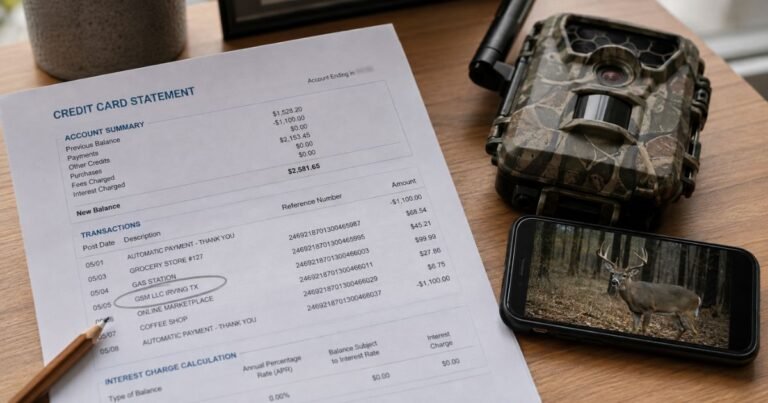
Before making a payment or filing a dispute, look at where the words appear. The transaction list, interest calculation section, and payment summary each tell a different story. This guide explains the differences using official U.S. consumer and card-network guidance.
What Is a Minimum Charge on a Credit Card?
There is no single universal fee called a minimum charge that appears on every credit card. The meaning depends on the wording used by your issuer or merchant. If the charge appears under fees or interest, it may be an account cost. If it appears next to the due date, it usually describes how much you must pay.
If a store displays a sign saying “$5 minimum for credit cards,” that refers to the smallest purchase it will accept on a credit card. It is not an additional fee automatically added by your bank. Separate these meanings first to avoid paying an unexplained charge or misunderstanding your statement.
Minimum payment due: the most common meaning
Most monthly credit card statements show a minimum payment due. The Consumer Financial Protection Bureau (CFPB) explains that this is the amount you must pay by the due date to satisfy the issuer’s monthly payment requirement. It is not a new purchase or a fee.
Suppose your statement balance is $1,200 and your minimum due is $35. Paying $35 by the due date may keep your account from being considered late, but it usually will not eliminate interest on the remaining balance. Your next statement can include additional borrowing costs under the card agreement.
Minimum interest charge: an actual account cost
Some credit card agreements specify a minimum interest charge when interest is owed for the billing cycle. Instead of billing a very small calculated interest amount, an issuer may apply the stated minimum. The terms and disclosures should explain whether the feature applies and how it is calculated.
For example, a hypothetical card agreement could impose a $1 minimum interest charge when interest is due, even if the calculated amount is smaller. This is just an example; you should not assume your card uses that rule. Check your issuer’s rate-and-fee disclosure and current cardholder agreement.
Is a minimum charge the same as an annual fee?
No. An annual fee is a card membership cost that may apply once per account year, depending on the product. A minimum interest charge is linked to interest-bearing account activity, while a minimum payment is part of monthly repayment.
Some cards have no annual fee but may still charge interest if you carry a balance. Others offer a promotional purchase APR and have special rules for certain transactions. Look at the correct disclosure instead of assuming one fee determines all the others.
How to recognize each minimum amount
| Statement or checkout wording | What it generally means |
|---|---|
| Minimum payment due | Required amount to pay by the due date |
| Minimum interest charge | Possible minimum borrowing cost when interest applies |
| Minimum purchase amount | Store’s minimum transaction size for accepting a credit card |
| Minimum transaction fee | Potential card-related fee or merchant charge that requires checking the agreement or receipt |
Not every issuer uses these exact words. If the statement line is unclear, ask the card company to identify whether it is a charge, required payment, authorization, or merchant transaction.
Can a store require a minimum credit card purchase?
Yes, within applicable rules. Visa’s U.S. consumer guidance says that in the United States and U.S. territories, a merchant may set a minimum purchase amount for eligible Visa credit card payments of up to $10. The same minimum is not permitted for Visa debit cards under the cited Visa rules.
For example, a small store may say it accepts a credit card only for purchases of at least $10. That is different from adding a $10 fee to a $2 purchase. The purchase minimum is a threshold for accepting that payment method, not necessarily money you must pay on top of the goods.
Other card networks and local laws can have additional rules. If a merchant demands more than the applicable limit or uses the rule on a debit card contrary to network rules, ask the merchant to clarify and contact your card issuer if needed.
What about a credit card surcharge?
A surcharge is an added amount associated with choosing a credit card as payment. It is not the same as a minimum purchase amount. Visa says merchants that impose permissible card surcharges must disclose them clearly, and network and legal restrictions can apply.
If a receipt shows a service fee, convenience fee, or surcharge, check the store’s posted notices and the applicable card-network rules. The legitimacy of a particular fee depends on the merchant, transaction, and jurisdiction, so do not assume every checkout fee is forbidden or allowed.
How is your minimum monthly payment calculated?
The formula depends on your issuer and agreement. Some issuers use a percentage of the balance, a fixed dollar amount, or a combination involving interest and fees, subject to stated terms. For a small balance, the required payment may equal the full remaining amount.
Find the minimum payment shown on your latest statement instead of estimating from a general online calculator. Look at the due date, any past-due amount, and the breakdown of interest or fees. The CFPB notes that making only minimum payments can extend repayment and increase total interest.
Why paying only the minimum can be costly
Paying the minimum keeps more of the debt outstanding. If your account is subject to interest, that balance can continue generating finance charges. Many statements include a repayment illustration showing how long payoff may take with minimum-only payments and an alternative amount that could repay the balance faster.
For example, if you carry $1,000 at a 24% APR and make only small payments, the balance declines slowly because interest uses part of each payment. This is a simplified example, not an issuer-specific payoff forecast. Read our finance charge guide and APR calculation explanation for more detail.
How to avoid a minimum interest charge
If your card offers a purchase grace period and you qualify for it, paying the full eligible statement balance by the due date can generally avoid interest on purchases. A cash advance or balance transfer may follow different rules. Review the card agreement carefully.
If interest is already accruing, extra payments can sometimes reduce future charges because many issuers calculate interest using daily balances. Ask your issuer how its minimum interest rule works and whether it applies only when some interest would otherwise be owed.
What if you do not recognize a minimum charge?
- Check whether the amount appears under transactions, interest, fees, or payment information.
- Compare the wording with your card’s latest terms and rate disclosures.
- Look for a merchant name or point-of-sale location if it appears as a transaction.
- Call your issuer using the number printed on the card for an explanation.
- If the charge is genuinely incorrect, ask about the applicable billing-dispute procedure.
Do not confuse the minimum payment with a withdrawal from your bank account. A payment may be scheduled through autopay, but the statement line showing “minimum due” does not itself prove the money has been collected.
How autopay changes the picture
Autopay settings may offer a minimum-payment option or a full-statement-balance option, depending on the card. If you select minimum autopay, the bank usually will not automatically pay the entire balance. Check your settings and available funds before the due date.
Switching to full-balance autopay can help avoid purchase interest for eligible accounts with a grace period, provided you can afford the withdrawal and the issuer processes it on time. Always confirm the next scheduled payment amount.
Official sources
- CFPB: Understanding Credit Card Payments
- Visa: Merchant Minimum Transaction Rules
- CFPB: Card Disclosure Regulations
- CFPB: Credit Card Interest
FAQs About Minimum Charges on Credit Cards
Q. Is a minimum payment a fee?
A. No. It is the amount your issuer requires you to pay by the due date. Interest and fees are separate parts of the account.
Q. Can I pay more than the minimum?
A. Yes. Paying more can reduce balances and future interest, subject to your card’s terms.
Q. Can a U.S. store require a $20 minimum for Visa credit cards?
A. Visa’s stated U.S. merchant rule generally limits minimum credit card transactions to $10. Ask your issuer about a merchant that applies a higher amount.
Q. What if I see a minimum interest charge despite paying in full?
A. Ask the issuer whether the amount is residual interest, a charge from another balance type, or a billing error.
Conclusion
Minimum charge on a credit card is not one universal fee. Read whether the term refers to a minimum payment, a minimum interest charge, or a store’s minimum purchase rule. Check your statement and card agreement, then contact your issuer if you see an amount you cannot explain.
Disclaimer: This article is general U.S. consumer education and not individualized financial or legal advice. Rules vary by card network, issuer, location, and account. Confirm current terms with the relevant provider.