What is CPC SCP Charge on Credit Card Statement?

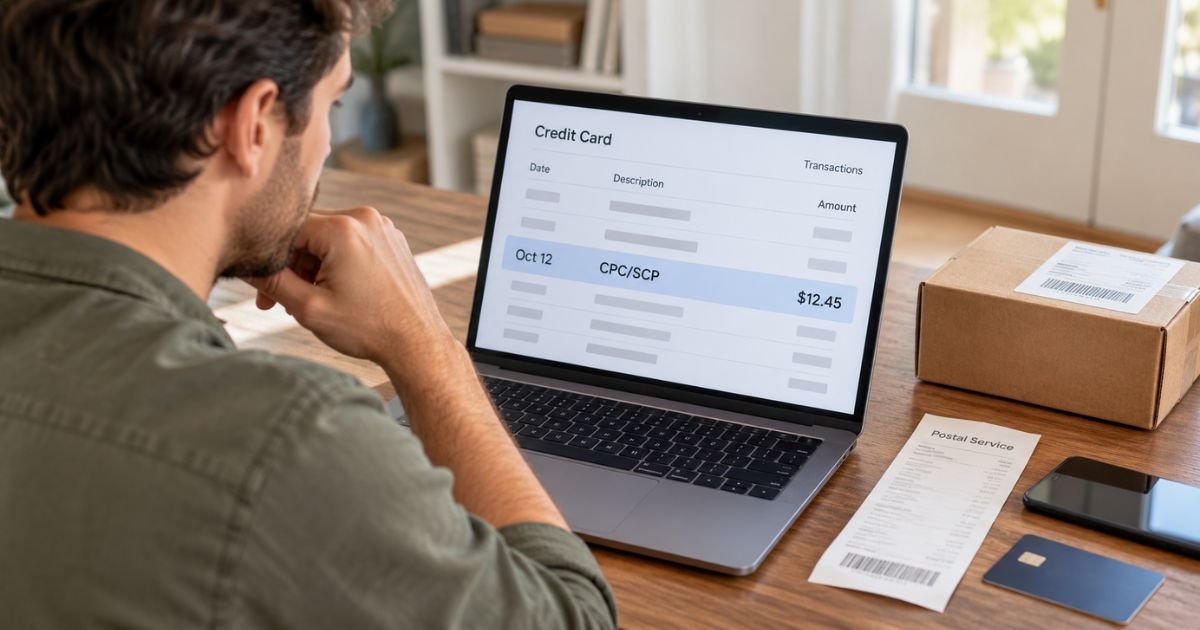
Seeing a CPC SCP charge on credit card statements can feel confusing, especially when you don’t remember making a postal purchase. Fortunately, this charge often comes from a legitimate business rather than an unauthorized transaction.
In most cases, CPC SCP refers to Canada Post, the Canadian postal service. This guide explains why the charge appears, how to verify it, and what to do if you don’t recognize the payment.
What Is a CPC SCP Charge on Credit Card?
A CPC SCP charge on credit card statements typically represents a payment to Canada Post Corporation, Canada’s national postal service. It may appear when you buy postage, ship a package, or pay for other postal services.
The letters stand for:
- CPC: Canada Post Corporation, the organization’s English legal name.
- SCP: Société canadienne des postes, its French legal name.
Both abbreviations refer to the same organization.
Canada Post accepts credit cards for many of its services. Depending on your bank, the transaction description may display CPC/SCP instead of the familiar Canada Post name.
This charge is usually a regular purchase, not a bank fee or separate subscription service. However, the statement description alone cannot prove that you authorized the payment.
Why Does CPC SCP Appear on Your Credit Card Statement?
There are several legitimate reasons why you might see this charge.
1. Shipping packages
If you’ve recently mailed a parcel through Canada Post, the shipping payment may appear as CPC/SCP.
This can include packages sent to Canadian addresses or international destinations.
2. Purchasing stamps or postal supplies
Buying stamps, envelopes, boxes, or packaging materials at a Canada Post location may generate this transaction description.
The amount generally depends on the items purchased.
3. Paying customs duties and taxes
If you’ve received an international package in Canada, you may have paid customs duties or import taxes.
Canada Post collects certain import charges on behalf of the Canada Border Services Agency. These payments can be made online or through eligible delivery and pickup options.
4. Renting a post office box
Payments for a Canada Post PO Box may also appear under this merchant name.
Check whether you’ve recently rented or renewed a postal box.
5. Buying shipping labels online
If you purchased a shipping label through Canada Post’s website or shipping tools, your credit card may show CPC/SCP.
This is particularly relevant if you frequently sell and ship items online.
How Does the CPC SCP Charge Appear on Your Statement?
The exact transaction description can vary depending on your credit card issuer, payment network, and the location of the purchase.
Here are some possible examples:
| Statement description | Possible meaning |
|---|---|
| CPC/SCP | Canada Post transaction |
| CPC SCP | Alternate merchant description |
| CPC/SCP #0271187 | Canada Post charge with a numeric reference |
| CHKCARD CPC/SCP | Debit or check card transaction |
| POS PURCHASE CPC/SCP | Point-of-sale purchase |
| PENDING CPC/SCP | Transaction awaiting final processing |
| POS REFUND CPC/SCP | Possible refund credit |
These descriptions illustrate how the merchant name may appear. However, not every bank uses the same wording.
Numbers following CPC/SCP may help identify the transaction or postal outlet. Their exact meaning is not always publicly documented.
If your statement includes a number or city name, keep those details when contacting your bank or Canada Post.
Is the CPC SCP Credit Card Charge Legitimate or Fraudulent?
A CPC SCP charge is generally legitimate when it matches a purchase you made through Canada Post.
However, a familiar merchant name doesn’t guarantee that every transaction is authorized.
You should investigate when:
- You haven’t used Canada Post recently.
- You don’t recognize the transaction amount.
- Multiple charges appear without an explanation.
- You haven’t purchased shipping services or postal supplies.
- No authorized cardholder recognizes the purchase.
For example, suppose you recently visited Canada and mailed a package. A CPC/SCP charge appearing afterward could be the shipping payment.
However, if you’ve never used Canada Post and can’t connect the charge to any purchase, contact your card issuer.
Important: Canada Post also warns about fraudulent delivery messages that request payment information through suspicious links. Always check shipment fees through its official website rather than an unexpected message.
How to Verify a CPC SCP Charge on Your Credit Card
Before reporting the transaction as fraud, try these steps.
Step 1: Check the transaction date and amount
Open your credit card statement and find the CPC/SCP entry.
Compare its amount and date with recent shipping purchases, postal receipts, or package deliveries.
Step 2: Search your email for receipts
Look for messages relating to:
- Canada Post shipping labels
- Postage purchases
- Package tracking confirmations
- Customs payments
- PO Box rentals or renewals
You may find a receipt that matches the charge.
Step 3: Check with other authorized cardholders
If a family member or employee uses your credit card account, ask whether they recently purchased postal services.
An authorized purchase made by another cardholder can easily be overlooked.
Step 4: Review your Canada Post account
Visit the official Canada Post website.
Check your available shipping records, tracking information, and payment confirmations.
Step 5: Contact your bank
If you still cannot identify the payment, call the number on the back of your credit card.
Your bank may have additional merchant information that doesn’t appear on your statement.
What Should You Do If You Don’t Recognize the CPC SCP Charge?
If your checks don’t explain the transaction, take action to protect your account.
First, contact your card issuer and explain that you don’t recognize the CPC/SCP payment. Ask whether the bank can provide more information about the merchant and transaction.
If you believe the payment is unauthorized, report it immediately. Your issuer can explain whether you should lock your card, replace it, or file a fraud dispute.
You may also need to submit a formal billing dispute.
For U.S. credit cards, you generally need to send a written billing-error notice within 60 days after the charge first appeared on your statement to protect applicable dispute rights. Contacting your issuer promptly is also recommended.
Follow your bank’s instructions carefully. Different procedures may apply to debit cards or cards issued outside the United States.
Can You Cancel a CPC SCP Charge or Get a Refund?
You generally cannot cancel a CPC/SCP charge simply by removing the merchant from your credit card account.
The payment usually relates to a postal transaction that has already occurred.
However, you may be able to request a refund in certain circumstances.
For example, if you purchased shipping services but didn’t use them, check whether your purchase qualifies under Canada Post’s refund rules.
For customs payments, the process is different. Completed duty-and-tax payments generally cannot be canceled directly, although eligible adjustments or refunds may be available.
To request help:
- Find your original purchase receipt or transaction confirmation.
- Contact Canada Post through its official support website.
- Explain why you believe a refund is appropriate.
- Provide your transaction details when requested through a secure channel.
- Keep any confirmation or case reference for follow-up.
Refund approval and processing times depend on the transaction type and applicable policies.
If the charge was unauthorized, report it to your card issuer rather than relying only on a merchant refund request.
Why Would a CPC SCP Charge Appear on a U.S. Credit Card?
Although Canada Post operates primarily in Canada, U.S. cardholders may still encounter this charge.
For example, you may have used your card while traveling in Canada or purchased a Canada Post shipping label for a Canadian shipment.
A U.S. business that regularly ships products from Canada might also see this descriptor.
If your transaction was billed in Canadian dollars, your U.S. credit card issuer may convert the amount into U.S. dollars.
Depending on your card agreement, a foreign transaction fee could also apply.
Check the original currency, converted amount, and any separate fees before deciding whether the transaction is incorrect.
How to Prevent Unrecognized CPC SCP Charges
You can reduce billing confusion by keeping better records of postal purchases.
Consider these habits:
- Save digital receipts for shipping and postal services.
- Enable transaction alerts through your bank.
- Review credit card activity regularly.
- Keep shipping labels and tracking numbers organized.
- Avoid saving your card details on devices you don’t control.
- Use the official Canada Post website for online payments.
These steps won’t prevent every unauthorized transaction, but they can make unexpected charges easier to investigate.
FAQs On CPC SCP Charge on Credit Card
Q: What does CPC SCP mean on my credit card statement?
A: CPC SCP typically stands for Canada Post Corporation and Société canadienne des postes. It generally identifies a payment for shipping, postage, or another Canada Post service.
Q: Is CPC SCP a recurring subscription charge?
A: CPC/SCP is not normally the name of a subscription service. Most charges relate to individual postal purchases, although some services, such as PO Box rentals, may involve periodic payments or renewals.
Q: Why is CPC SCP charging my credit card when I haven’t visited Canada?
A: You may have purchased Canadian shipping services online or paid for a transaction connected to Canada Post. If none of these situations applies, contact your bank to investigate the payment.
Q: Can I dispute an unauthorized CPC SCP charge?
A: Yes. If you believe the transaction is unauthorized, you can report it to your credit card issuer and request an investigation. Your dispute rights and the outcome will depend on your card agreement and applicable law.
Conclusion
A CPC SCP charge on credit card statements usually comes from Canada Post for shipping, postage, customs payments, or other postal services. In many cases, checking your receipts and recent transactions will explain the unfamiliar description.
If you still can’t identify the charge, contact Canada Post or your card issuer through official channels. Acting promptly can help you resolve billing errors and protect your credit card account.
Disclaimer: This article is for informational purposes only and does not provide financial or legal advice. Billing descriptions, refund policies, and dispute procedures may vary by card issuer and jurisdiction. Verify account-specific questions directly with Canada Post or your bank.