
What is TFC Canada Inc Charge on Credit Card?

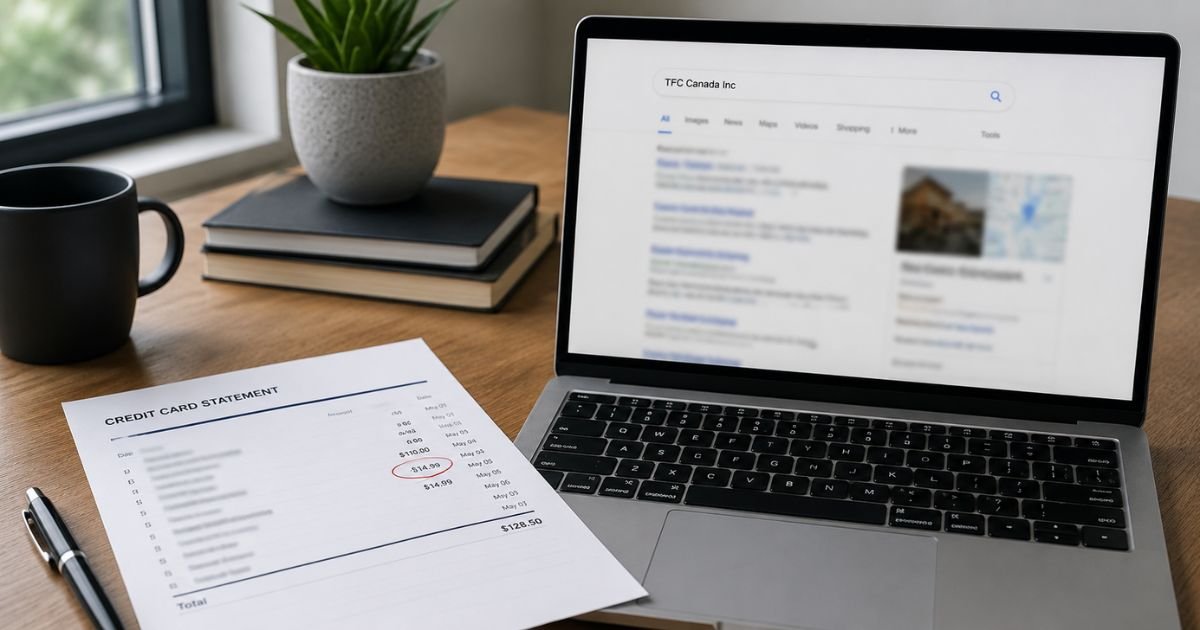
A TFC Canada Inc charge on credit card can feel confusing if you don’t recall the purchase. Unfamiliar charges are often legitimate but hard to recognize at first.
This guide covers the most likely explanations based on available public information, how to check the charge, and what to do next.
What Is the TFC Canada Inc Charge?
Public records and consumer reports do not point to one single, widely known company that always appears under the exact name “TFC Canada Inc.”
The descriptor may relate to a few different businesses that use similar names.
Possible matches include:
- Online preparation platforms for the TCF Canada French language test (used for Canadian immigration)
- Student tuition payment or financing services under names like TFC Tuition
- Media or IPTV subscription services tied to The Filipino Channel (TFC) in Canada
- Other smaller Canadian firms with “TFC” or “TCF” in the name
Descriptor variants may include TFC Canada Inc, Tcf Canada Inc, TFC CANADA INC, or similar spellings with numbers.
Typical amounts reported in general consumer discussions for related services range from under $20 for short test-prep packs to higher figures for multi-month tuition plans or subscriptions.
Exact pricing varies by product and is not standardized across every possible merchant.
Because the name is not unique, the charge could also come from a different merchant that processes payments under a similar corporate name.
Always cross-check the full statement details.
Why Did This Charge Appear?
Common reasons include:
- A one-time or short-term purchase for language test preparation materials
- Enrollment in a student payment plan or tuition financing service
- A recurring media or IPTV subscription
- A forgotten online order or free-trial conversion
Some users may have entered card details on a website advertising TCF Canada exam prep or similar services. In other cases the charge may link to a school or training program that uses a third-party billing company.
Limited public complaint volume means the exact source often requires personal account checks rather than a single universal answer.
How to Verify the Charge
- Note the exact date, amount, and full merchant name (including any numbers or codes) on your statement.
- Search your email (including spam and promotions) for confirmations that match the date and amount.
- Review recent online purchases, app store history, or PayPal activity for anything related to language tests, tuition, or media subscriptions.
- Search the transaction ID or partial merchant name on your bank’s site or app for more details.
- Contact the number or email listed on any matching receipt or confirmation if you find one.
Save screenshots of your statement and any related emails. These help if you need to ask the merchant or your bank for clarification.
Is the Charge Legitimate or Fraud?
Many charges that look unfamiliar turn out to be real purchases processed under a corporate or parent-company name.
Without a clear, high-volume pattern of fraud reports specifically for “TFC Canada Inc,” the charge is more likely tied to an actual service you or someone with access to your card started.
Common legitimate explanations
- Purchase of TCF Canada exam practice packs or courses
- Student tuition payment plan billing
- Subscription to a media service using a TFC-related billing name
Warning signs
- No matching emails, receipts, or account history at all
- Multiple unexpected charges in a short time with no prior activity
- Charges that continue after you believe you canceled
When to contact the bank: If your own records show nothing and the merchant does not respond with a clear explanation, contact your card issuer to review the transaction. Most major issuers offer strong protections for true unauthorized charges when you report them promptly.
How to Cancel TFC Canada Inc
Because the exact merchant can vary, start with the purchase channel you used.
- Log into any account you created on a related website (for example a language-test prep site) and look for billing or subscription settings.
- If the purchase went through an app store, cancel through Apple or Google Play subscription management.
- If you received a confirmation email, reply to it or use any support address listed and request cancellation plus a statement of the linked product.
- For tuition-related services, check the student portal or the school that arranged the financing plan.
- Follow up in writing and keep the confirmation that future billing has stopped.
Monitor your next statement carefully after any cancellation request.
Can You Get a Refund?
Refund rules depend entirely on the specific merchant and product. Some short-term online packs have very short windows (as little as 24–48 hours).
Longer tuition or subscription plans often have stricter or non-refundable terms once access begins.
Contact the merchant first with your transaction details and a clear refund request.
If they decline or do not respond, and you believe the charge was unauthorized or the service was not provided, open a dispute with your card issuer.
Outcomes vary by issuer policy and the evidence you supply. Do not assume a refund is automatic.
What to Do If the Charge Is Unauthorized
- Gather your statement, any related emails, and notes on when you first noticed the charge.
- Contact the merchant (if you can identify a working email or phone) and request an explanation and refund in writing.
- If you get no satisfactory answer, log into your bank or card account and dispute the charge as unauthorized.
- Provide the evidence you collected.
- Change passwords on related accounts and turn on transaction alerts.
- Watch future statements for any follow-up attempts.
Report quickly. Time limits for disputes are set by your card issuer and the card networks.
Prevention Tips
- Enable real-time alerts for every credit card transaction.
- Keep a simple list or folder of active subscriptions and one-time digital purchases.
- Read the fine print on free trials and short-term packs before entering card details.
- Prefer virtual card numbers for new or unfamiliar online services when your bank offers them.
- Review statements weekly instead of waiting for the monthly bill.
- Search merchant names as soon as an unfamiliar charge appears.
FAQs on TFC Canada Inc Charge on Credit Card
Q: What is TFC Canada Inc?
A: The name does not point to one single widely documented company. It may relate to language-test preparation services, student tuition financing, media subscriptions, or another Canadian firm using a similar corporate name. Check your own records for the matching purchase.
Q: Why does the charge use this name?
A: Merchants often bill under a legal company name or parent entity rather than the consumer-facing brand. The statement descriptor can look different from the website or app you remember.
Q: How do I stop future charges?
A: Cancel through the original purchase method (website account, app store, or student portal) and confirm in writing. Then watch your next statement to make sure billing has ended.
Q: Is this charge a scam?
A: Public information does not show a clear, high-volume scam pattern under this exact name. Many similar-looking charges turn out to be legitimate but forgotten purchases. Still verify every detail against your own activity and contact your bank if nothing matches.
Conclusion
A TFC Canada Inc charge on credit card is most often linked to a real but hard-to-recognize purchase such as language-test materials, a tuition payment plan, or a media subscription.
Because several businesses use similar names, the exact source usually requires checking your own emails, receipts, and account history.
Start with verification steps, then cancel or dispute as needed. Acting quickly and keeping records protects you whether the charge is legitimate or not.
Stay alert with transaction notifications and regular statement reviews so unexpected names become easier to identify.
Disclaimer: This article is for informational purposes only and is not financial, legal, or professional advice. Merchant identities, refund rules, and dispute outcomes vary. Always verify details with the company that appears on your statement and with your card issuer for your specific situation.