What is SunPass Toll Charge on Credit Card?

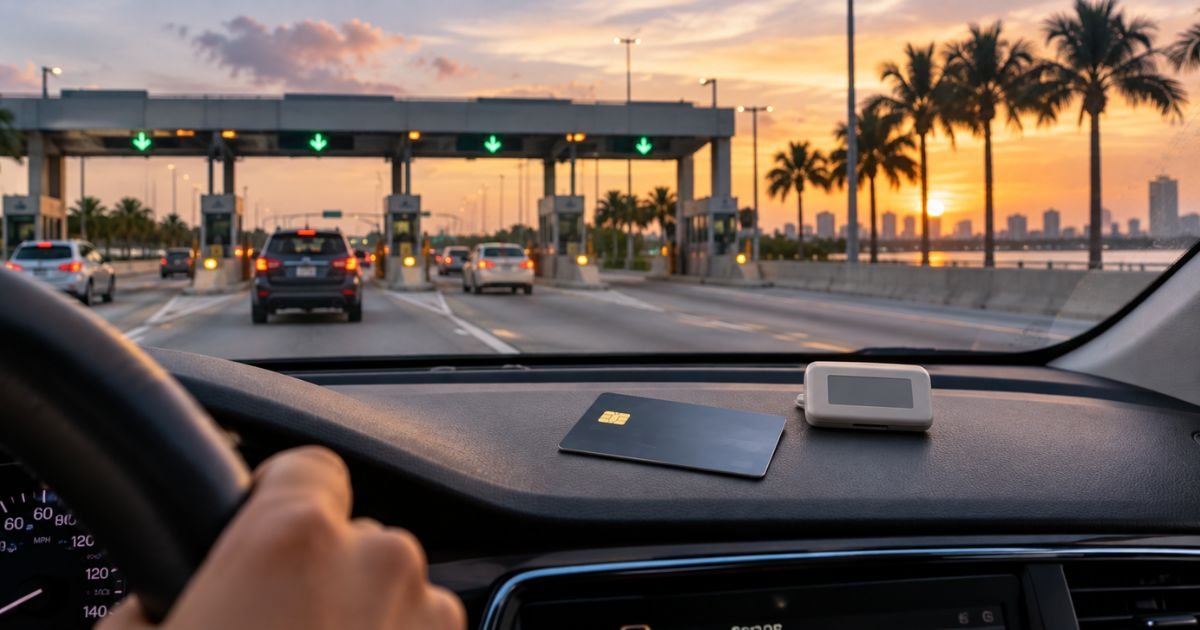
A SunPass toll charge on credit card can feel confusing if you only drove through Florida once. The bank line rarely names the road. A lump sum can look larger than any single plaza.
Unfamiliar toll charges are often a prepaid reload, not a new subscription. This guide shows you how the charge typically appears, how to match it to trips, and how to stop Easy Pay if you no longer need it.
What a SunPass Toll Charge on Credit Card Means
SunPass is Florida’s prepaid electronic toll program, run with the Florida Department of Transportation. A Mini or PRO sticker on the windshield pays as you pass a gantry. The toll comes out of a prepaid SunPass balance.
A SunPass toll charge on credit card is usually not one plaza at a time. Official pages describe Easy Pay as a reload.
When your prepaid balance hits a low threshold, SunPass charges the card you saved and puts that money into the account. The default low-balance floor for personal accounts is $10. The reload amount is the preset you chose when you enrolled.
You can also tap Add Funds yourself. That manual top-up posts as a card charge too.
If you had no working transponder, Florida may bill TOLL-BY-PLATE instead. The registered owner gets a mailed Toll Enforcement Invoice plus a $2.50 administrative charge per invoice. Paying that invoice online can also hit the same card.
SunPass Plus can add parking at some Florida airports, Port Canaveral, and Hard Rock Stadium in Miami. If the prepaid balance is short, official terms say the full parking amount may bill the Easy Pay card.
How the charge usually appears
Banks often print SUNPASS, SUNPASS.COM, or FLORIDA SUNPASS. Some lines add TOLL or a city in Florida.
The amount is typically a round reload such as $10, $20, or $50, not a $2.75 plaza. That is a clue you are looking at Easy Pay, not a single trip.
TOLL-BY-PLATE invoice payments can be odd amounts that match the mailed bill. Rental-car toll programs may use a different name, such as the rental brand or a vendor like PlatePass. Those are not SunPass even if you drove the Turnpike.
SunPass says official invoices go by U.S. mail. SunPass does not email toll bills. Pay only at sunpass.com. Texts that demand instant payment are a common scam.
Paper account statements cost extra. Official terms list $1.50 per mailed monthly statement, deducted from the prepaid balance. Website statements are free.
Why the amount can look larger than one toll
Easy Pay refills a pot of money. Many small trips later drain that pot. The card sees the refill, not each gantry.
After the first 35 days, official terms say SunPass may review activity and change the reload size to match how much you drive. A later charge can be bigger than the first one.
Someone else may use a car on your account. Each plate and transponder you add can spend the same prepaid balance.
A rental plate left on the account after you return the car can keep billing your balance. Official rental help says add the plate with start and end dates, then take your transponder out of the car.
Out-of-state travel can still hit a Florida account. Official pages say a SunPass transponder works in Florida, Georgia, and North Carolina. Those trips still pull from the same prepaid pot.
Unpaid TOLL-BY-PLATE invoices can grow. A second notice may follow. Unpaid balances can go to collections or a registration hold. That path is separate from Easy Pay, but paying the invoice still uses a card.
Match the charge to trips or a reload
Sign in at sunpass.com or the official SunPass app. Open account activity. Look for replenishments on the same date as the bank line.
Then open toll transactions. Match plaza names, times, and plates. Free online history is the official record. Mail statements are optional and cost money.
If you paid a mailed bill, look up the invoice number and plate on sunpass.com. Official FAQ pages let you view the document and plate photos.
Check rental dates. Confirm you set an end date and removed the sticker.
Ask anyone who drives a listed car. A spouse’s weekend trip still spends your prepaid funds.
Keep screenshots of the card line and the SunPass activity page. You will need them if you call.
Stop Easy Pay or fix a wrong charge
Easy Pay is the repeat card charge. Turn it off in account payment settings if you no longer drive Florida toll roads. Then spend down or watch the prepaid balance so it does not go negative.
You can add cash at authorized Florida stores instead of keeping a card on file. Official pages list cash reload as an option that does not need a card.
Remove plates and transponders you no longer use. Close or update the account if you sold the car.
To question a toll or invoice, start at sunpass.com. Official help points unpaid-toll disputes to Unpaid Tolls, then File a Dispute. You can also call 1-888-TOLL-FLA (1-888-865-5352). Hours listed on the contact page are Monday through Friday, 7 a.m. to 7 p.m., and Saturday, 8:30 a.m. to 5 p.m. Closed Sunday.
Email listed by official SunPass social accounts for help is TPK.SunPass_fdot@dot.state.fl.us. Walk-in centers are listed on sunpass.com.
If the car was a rental and you did not add it to SunPass, call the rental company. Official Turnpike pages say rental vendors collect those tolls under the rental contract, often with their own daily fee.
Do not ignore a Uniform Traffic Citation. That ticket follows unpaid invoices and has its own court deadline on the form.
What to do if you do not recognize it
Stay calm and work in order. Match Easy Pay reloads and trip history first.
If the trips are real, decide whether to keep Easy Pay or switch to manual or cash reloads. If a plate or time is wrong, file a dispute with the plaza details.
If you never opened SunPass and no invoice matches, treat the card line as possible fraud or a look-alike site. Use only sunpass.com. Official SunPass posts say the agency will not demand instant payment by surprise text.
Then call your card issuer. For a posted charge you did not authorize, you can typically file a dispute. Time limits vary by issuer.
Watch the next statement. A closed Easy Pay plan should stop new reloads once the current trigger is off.
FAQs On SunPass Toll Charge on Credit Card
Q: Why is a SunPass toll charge on credit card $20 when each plaza was a few dollars?
A: The card usually pays an Easy Pay reload, not one gantry. Official pages say the prepaid account refills by a preset amount when the balance hits your low threshold, often $10. The trips then come out of that balance.
Q: Is SunPass a monthly subscription?
A: No. There is no separate membership club fee described on official SunPass pages. You prepay tolls. Easy Pay only bills the card when the prepaid pot runs low. You can add cash or turn Easy Pay off.
Q: What if I rented a car in Florida?
A: Add the rental plate and the exact rental dates in your SunPass account if you want those tolls on your prepaid balance. Remove your transponder when you return the car. If you used the rental company’s toll program instead, that vendor’s fee is separate. Call the rental brand listed on the contract.
Q: How do I dispute a SunPass charge I think is wrong?
A: Log in and compare activity to the bank date. For a mailed invoice, use File a Dispute under Unpaid Tolls on sunpass.com, or call 1-888-865-5352. Have the invoice or plaza time ready. Then talk to your card issuer only if the charge is unauthorized or still unresolved.
Conclusion
A SunPass toll charge on credit card is typically an Easy Pay refill, a manual Add Funds payment, a TOLL-BY-PLATE invoice, or airport parking on SunPass Plus. Match sunpass.com activity before you assume fraud.
Turn off Easy Pay if you are done with Florida tolls, remove old plates, and dispute wrong trips with SunPass first. If nothing in the account matches, use the official phone line, then your card issuer.
Disclaimer: This article is for general information only. It is not financial, legal, or tax advice. SunPass rates, Easy Pay rules, and invoice fees can change and may vary by road and card issuer. Confirm account-specific questions at sunpass.com, with SunPass, or with your bank before you cancel or dispute a charge.